The 9:16 Format: How Smartphones Changed Content Production
It All Started in China
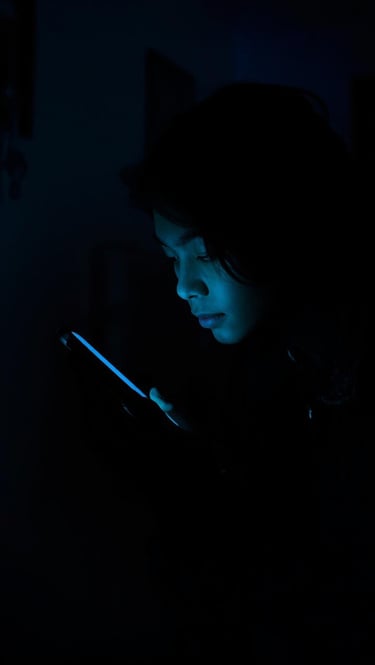
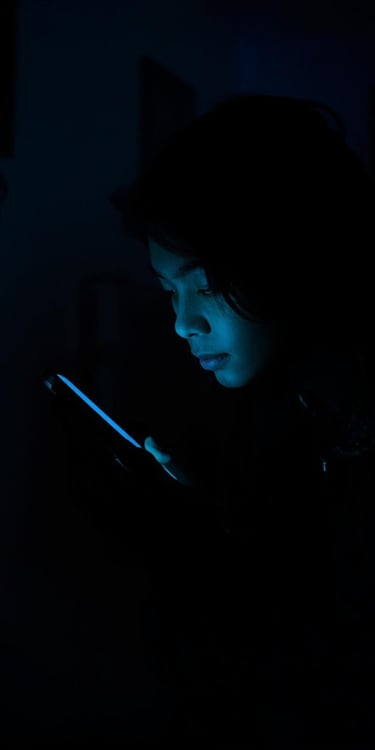
In recent years, something has changed in the way the world produces and consumes moving images. Not slowly — fast.
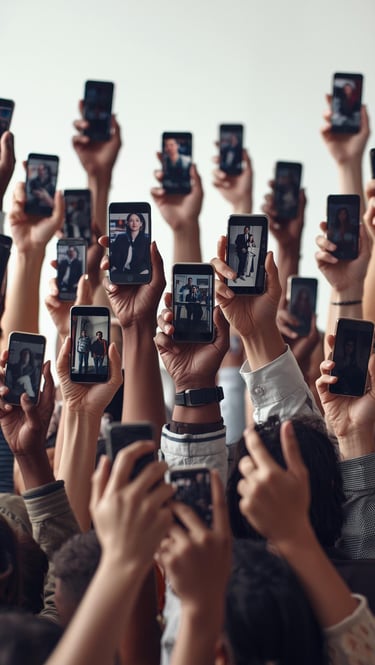
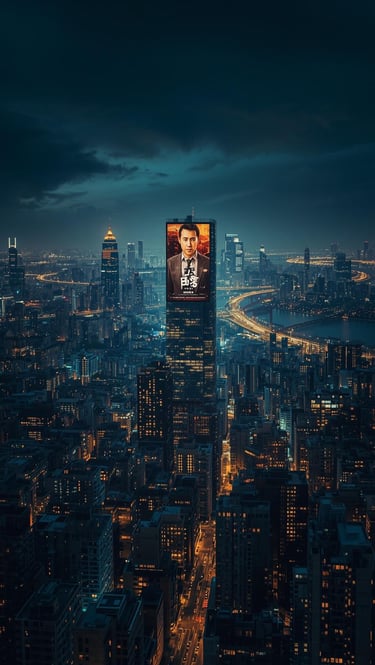
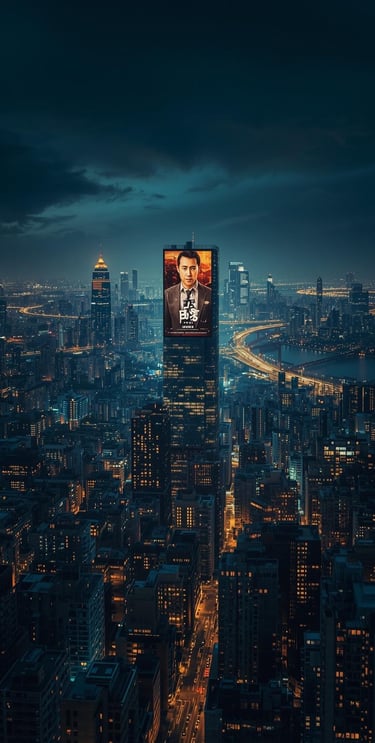
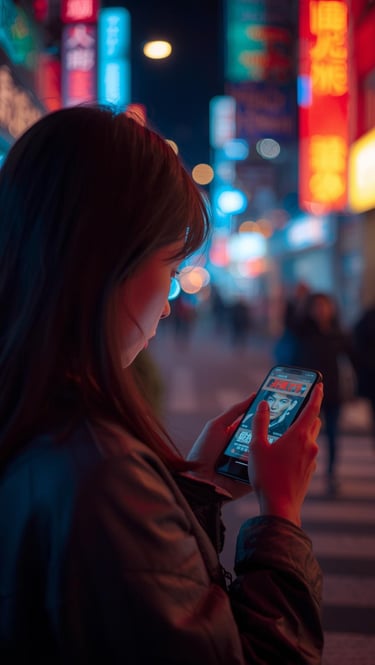
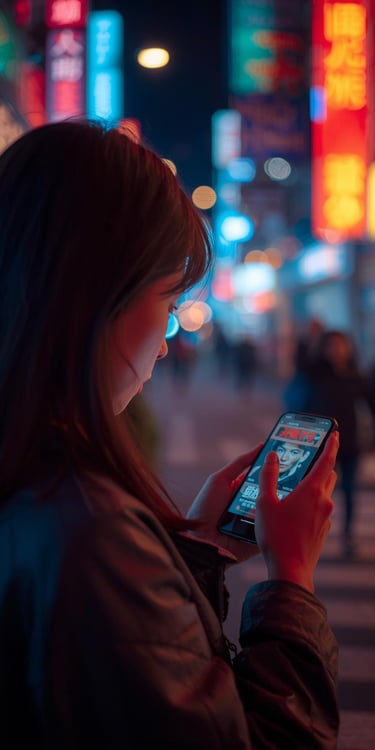
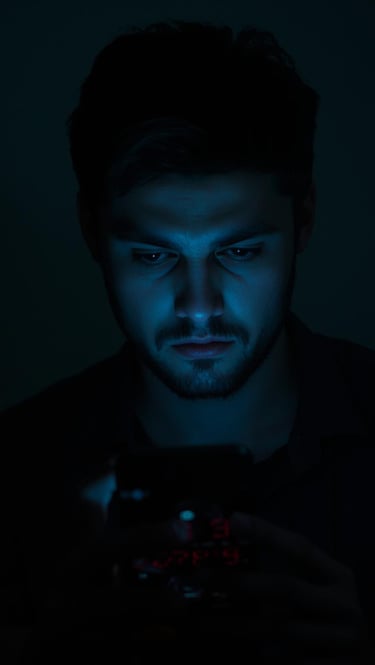
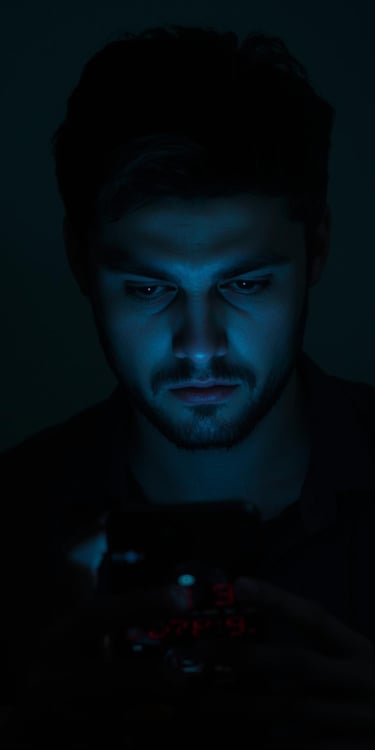
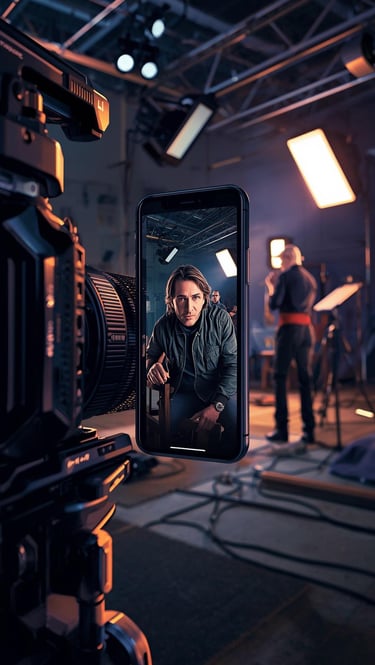
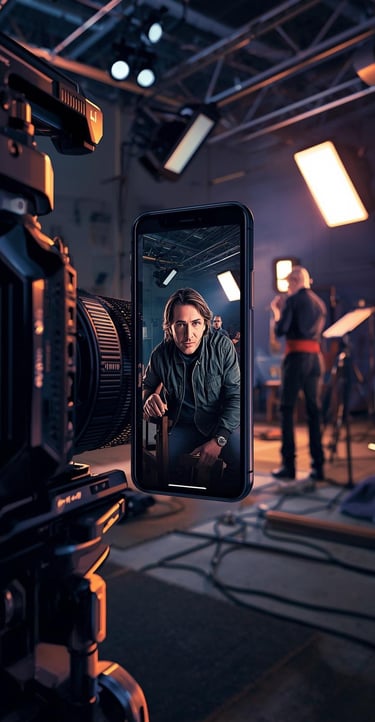
It all began in China, around 2020, with a format called duanju: micro-series filmed vertically, with episodes lasting 60 to 90 seconds, designed to be watched holding your phone exactly the way you always hold it. By June 2024, this format had reached 576 million users in China alone — more than half of the country's internet users — generating a market worth approximately $7 billion and over 600,000 jobs.
A Global Explosion
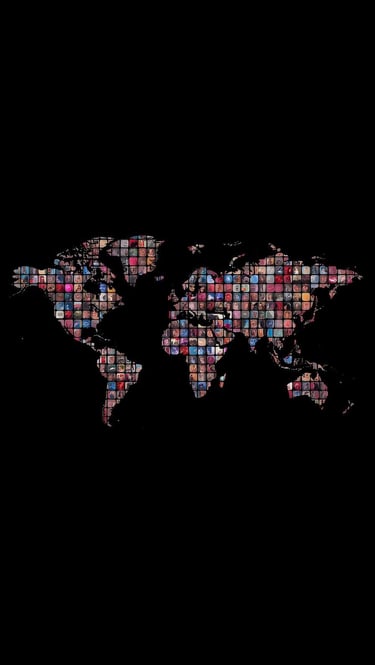
In 2023, the phenomenon went global. Vertical production companies emerged in the United States, Australia, Spain, the United Kingdom, and Turkey. Dedicated platforms — ReelShort, DramaBox, NetShort — gathered tens of millions of monthly active users. Sector revenues in Q1 2025 were nearly four times higher than the same period in 2024.
Professional Productions, Industrial Timelines
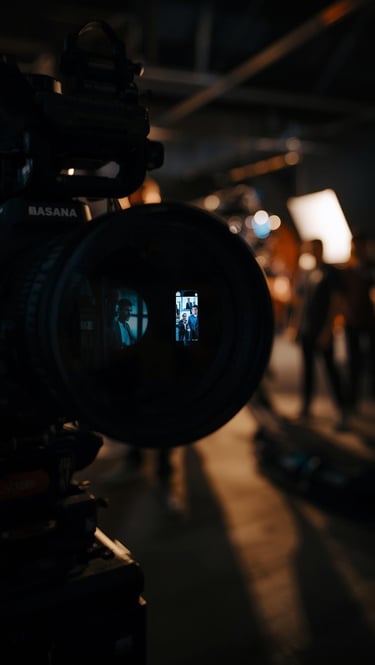
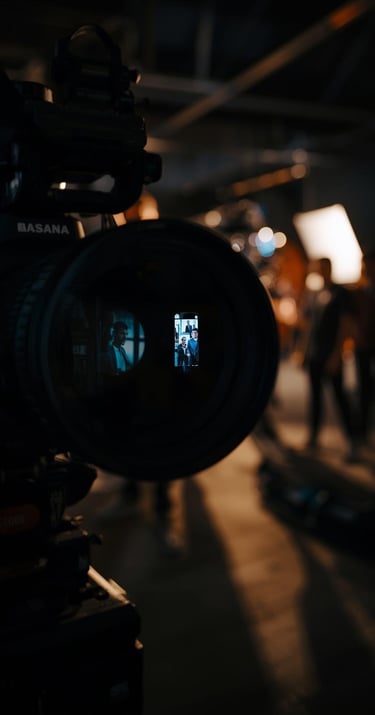
This is not just amateur social media content. These are professional productions with actors, crews of 60 to 90 people, and scripts structured across 50 to 100 episodes. Average budgets are low — between $100,000 and $300,000 per series — but the pace is industrial: 6 to 9 days of shooting, immediate distribution. A completely different production logic from the traditional one.
Brands Are Jumping In
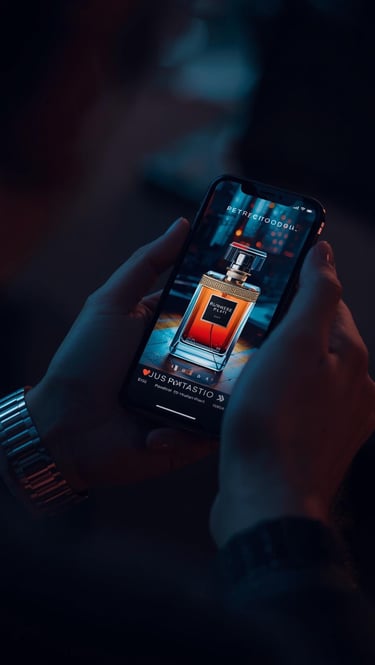
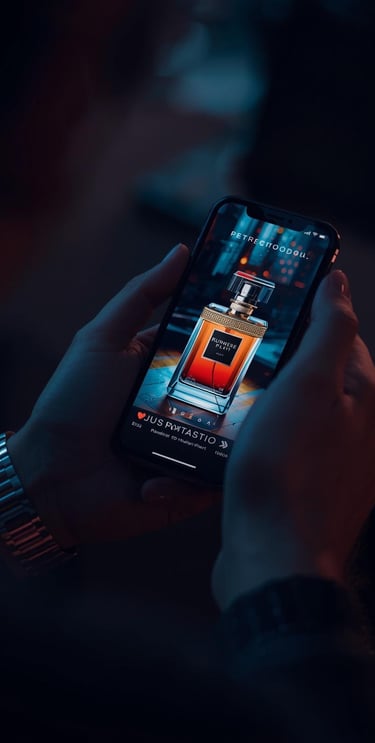
The format has also attracted advertising. Vertical videos achieve a 90% higher completion rate than horizontal ones. Brands are no longer just adapting their ads — they are entering the series directly as sponsors or product placements. In 2025, mobile video advertising spend in the United States reached $85 billion.


Even Netflix Is Adapting
The most telling signal comes from Netflix. In May 2025, the platform announced the testing of a TikTok-style vertical feed on its mobile app, allowing users to scroll through clips from its original titles. CTO Elizabeth Stone stated that users sometimes want something more "snackable" — and Netflix wants to be able to offer it.
The Numbers Speak for Themselves
Today, over 75% of video views worldwide happen on smartphones. Video content accounts for 82% of all global internet traffic. The 9:16 format is no longer a secondary option. It has become a language.
THE CONTENT EXPLOSION
Are We Eating Too Fast?
From the Steam Engine to the Streaming Era
Let's be honest. You've done it. We've all done it. Opened Netflix, scrolled for twenty minutes,
started something, abandoned it, started something else. There is more to watch than any human being could consume in a lifetime — and it keeps growing, every single day. How did we get here?
The answer goes back much further than Netflix. It goes back to a steam engine in 1760.
When Fewer Meant Better
In the 1930s and 1940s, Hollywood produced between 400 and 800 films per year.
Five major studios controlled everything — MGM, Warner Bros., Paramount, Fox, RKO. Directors, cinematographers, set designers, and composers worked under permanent contract, spending entire careers mastering a single craft. The system was rigid. But it gave us Hitchcock, Wilder, Ford, and Welles. It gave us Casablanca, Sunset Boulevard, and Citizen Kane.
In 1939 alone — widely considered Hollywood's greatest single year — masterpiece after masterpiece landed in the same twelve months. Quality was not accidental.
It was structural. When you produce less, you invest more. In time, in craft, in detail.
Then the Barriers Fell
Television arrived. Then cable. Then home video. Then the internet. Then streaming.
And the numbers exploded.
Between 2005 and 2015, global film production doubled — from 4,584 feature films per year to 9,387.
In the United States, scripted original TV series went from 182 in 2002 to 600 in 2022 — the moment the industry itself named Peak TV. Including all platforms and formats, 1,695 shows premiered in a single year in the US alone. Every platform needed originals.
Every market needed titles. The logic was simple and ruthless: more content, more subscribers, more revenue. Speed became the priority.
Volume became the standard.
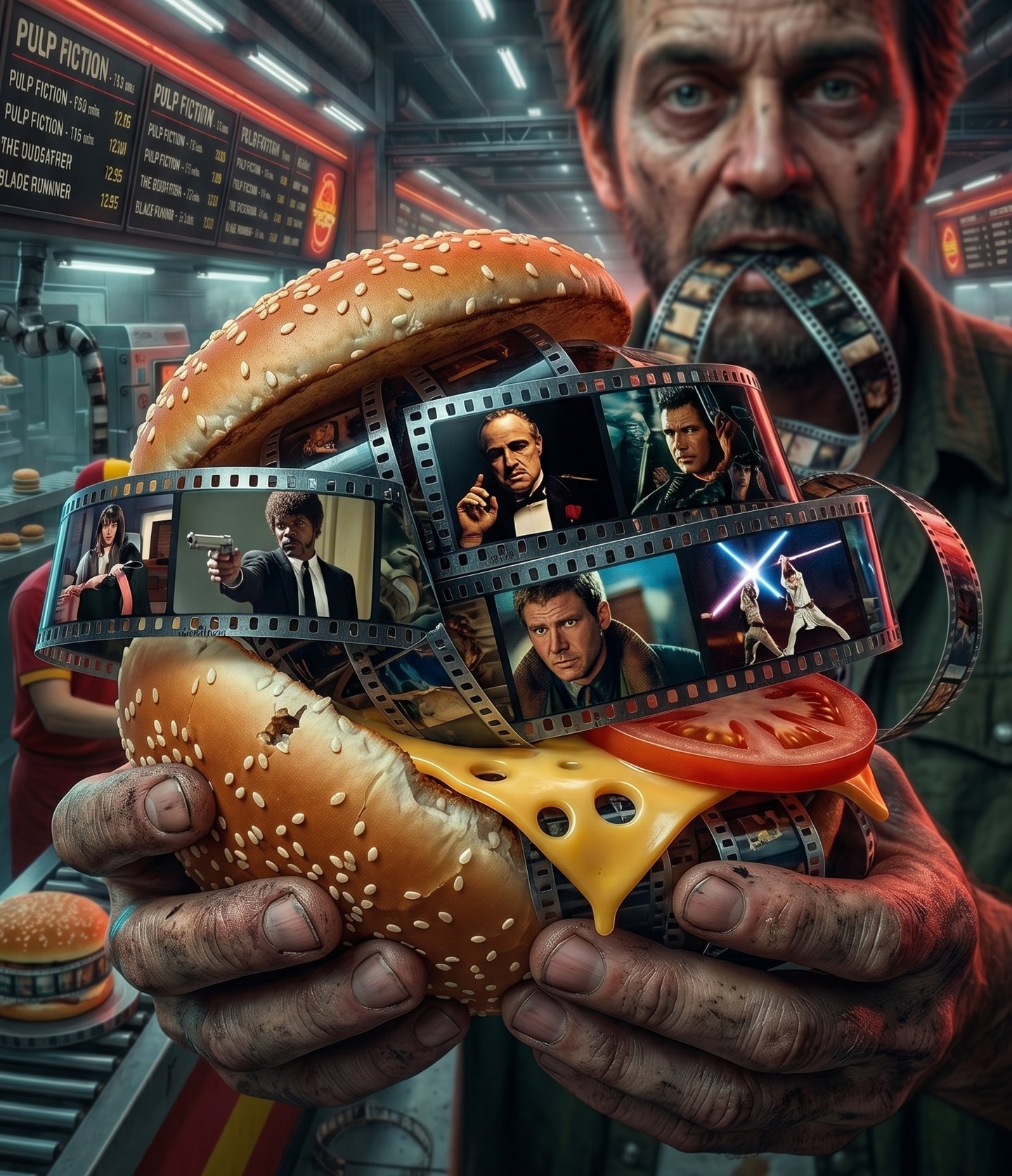
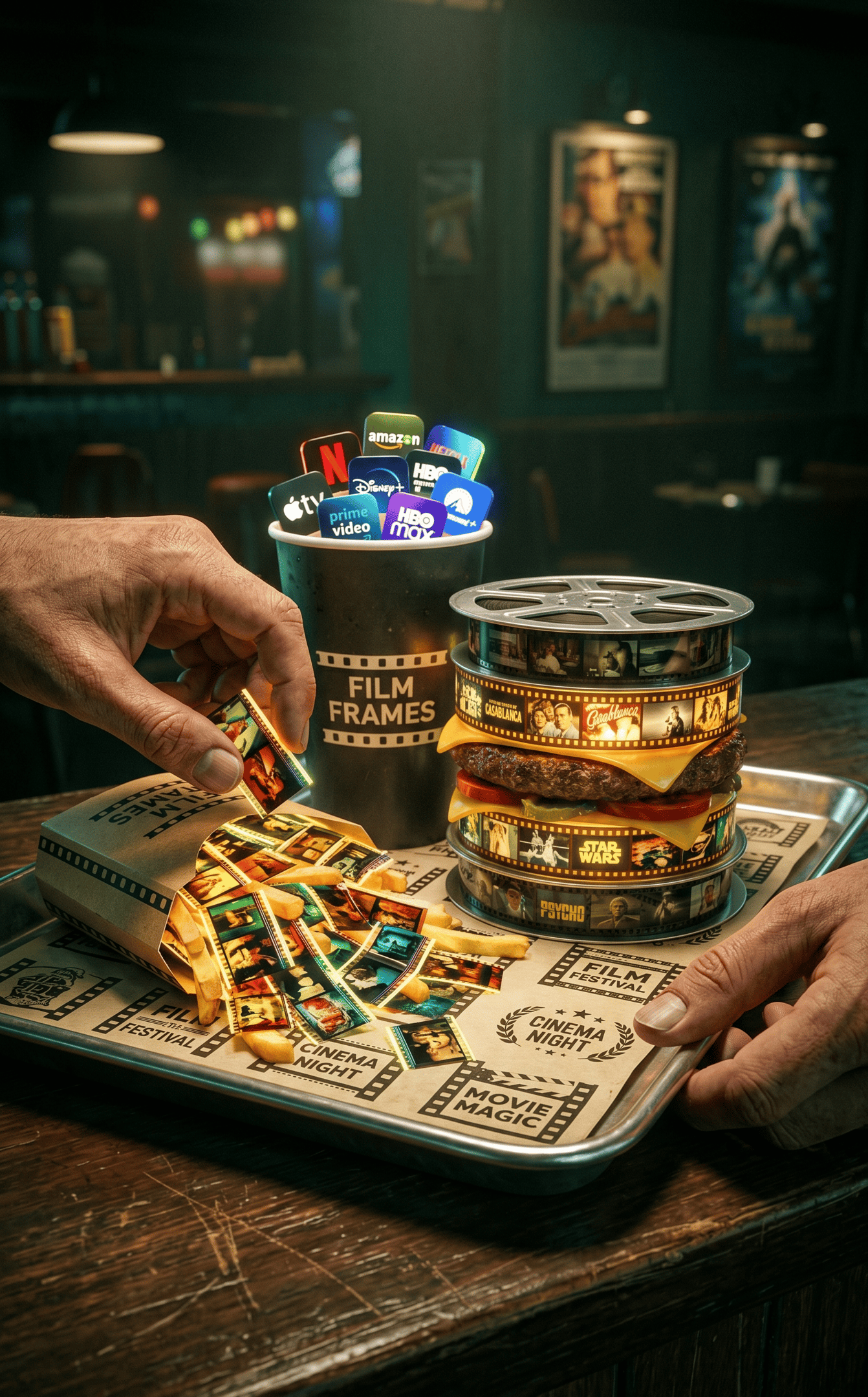
Fast Food Content
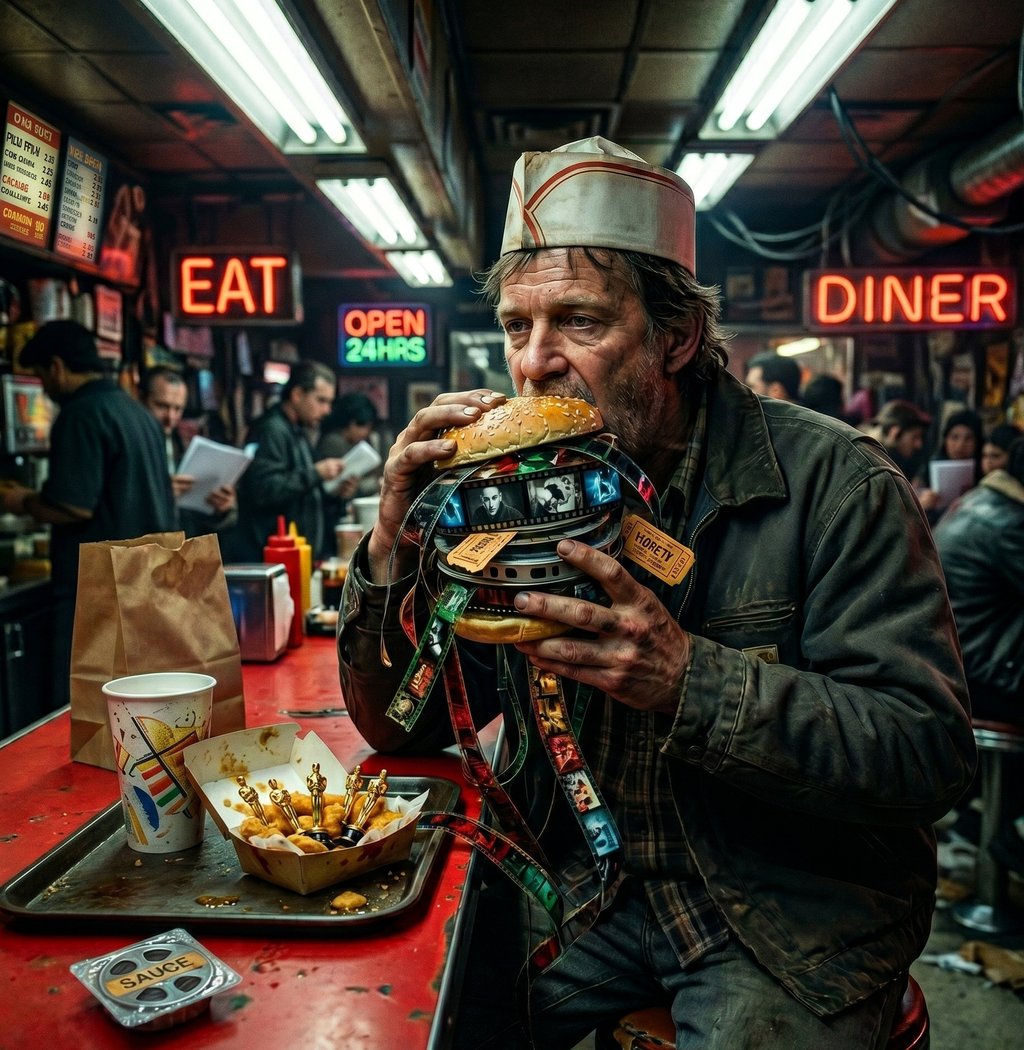
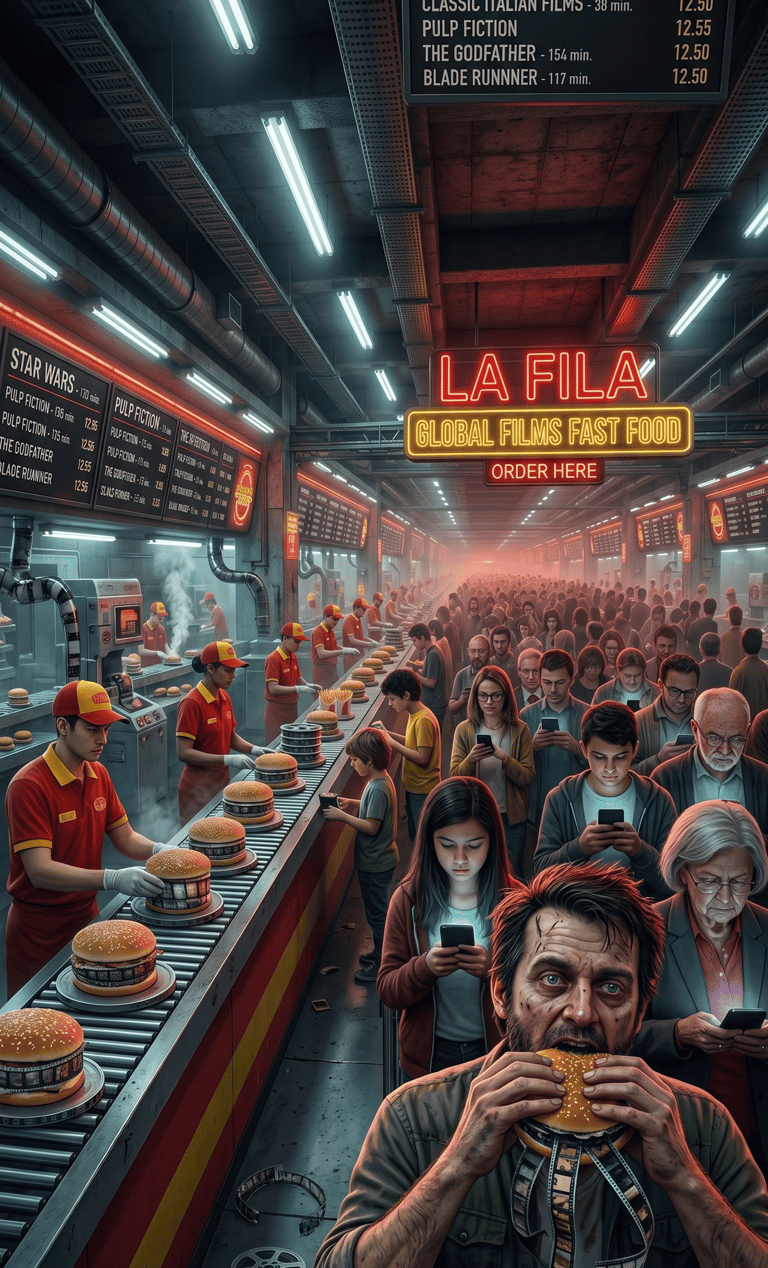
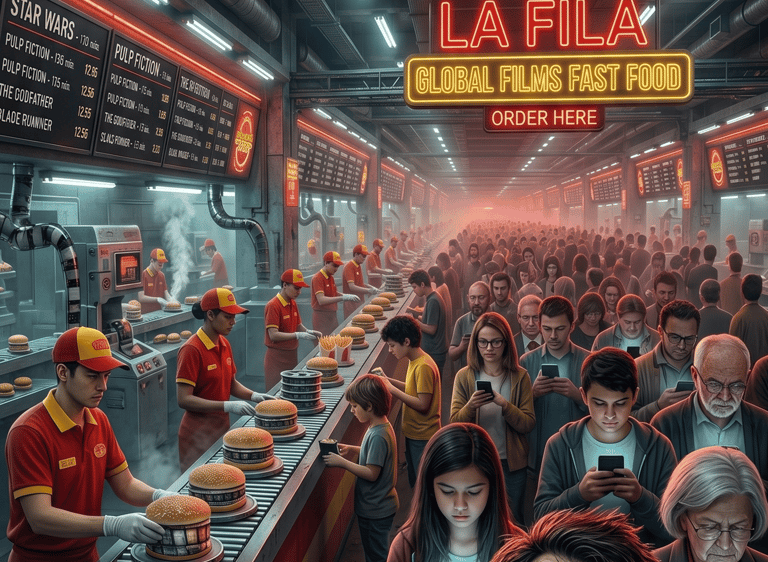
Here is the thing. This is not new. This is not a Netflix problem. This is what humans do. When the
steam engine industrialized textile manufacturing in the 1760s, handmade cloth did not disappear.
Master weavers still existed. But they became a tiny minority in an ocean of mass-produced fabric.
More product, faster delivery — and a quiet, steady drop in the average quality of what people wore
every day. Cinema is following the same curve. The great films are still being made. The great
directors still exist. But they represent an ever-smaller fraction of a system that now operates at a
speed and volume that craftsmanship alone cannot sustain. And the 9:16 format — micro-series
shot in a week, distributed instantly, consumed in 90 seconds — is simply the most accelerated
version of this same force. Fast food content. Abundant, efficient, globally available.
The human species accelerates. It always has. More people, more demand, more output. This is not a crisis.
This is evolution. But here is the question worth sitting with.
THE CLIMB 🇬🇧 🇨🇿 🇵🇱 🇧🇪 🇹🇷
Criteria: Percentage growth in film production in 2024 compared to 2023. Not who produces the most in absolute terms — but who grew the fastest in a single year.
Sources:
European Audiovisual Observatory — Annual Cinema Round-Up 2024 (obs.coe.int)
WIPO / Omdia — Global Film Production Report 2025 (wipo.int)
#5 — UNITED KINGDOM — +22%
The UK added 53 new titles in 2024 alone, and recorded a historic high of £6.27 billion in combined
film and high-end television production spending in 2022. Directors like Ridley Scott and Christopher
Nolan anchor the industry, while a new generation — from the team behind Saltburn to All of Us
Strangers — is redefining British authorship.
The secret: a 40% tax relief on qualifying productions that makes the UK one of the most attractive
destinations for international shoots on the planet.


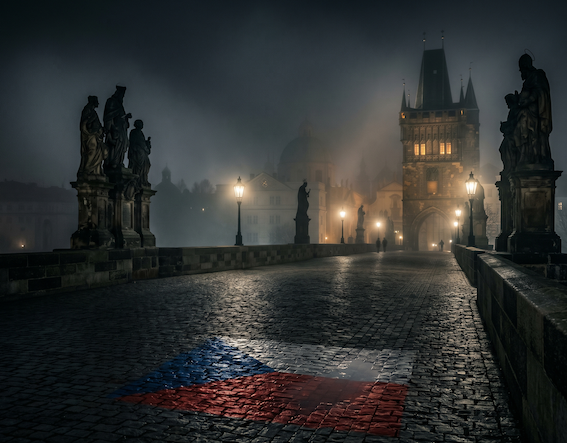
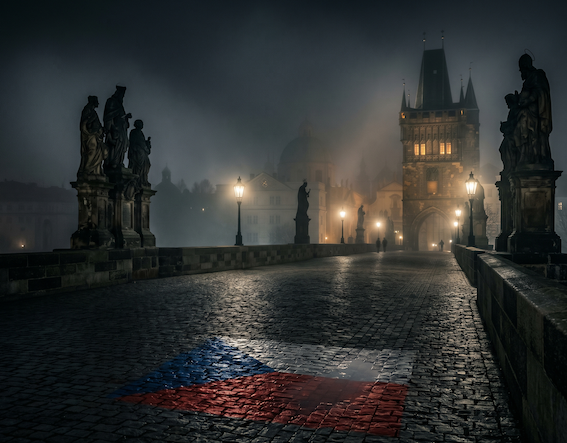
#4 — CZECH REPUBLIC — +24%
Czechia grew by 24% in film output in 2024, adding 13 new titles. Prague's Barrandov Studios — one of the largest in Europe — have long served as a backdrop for major international productions.
The country has become a quiet powerhouse of post-production and VFX, attracting Hollywood
shoots while simultaneously nurturing a strong domestic auteur scene.
The secret: world-class infrastructure at a fraction of Western European costs.
#3 — POLAND — +34%
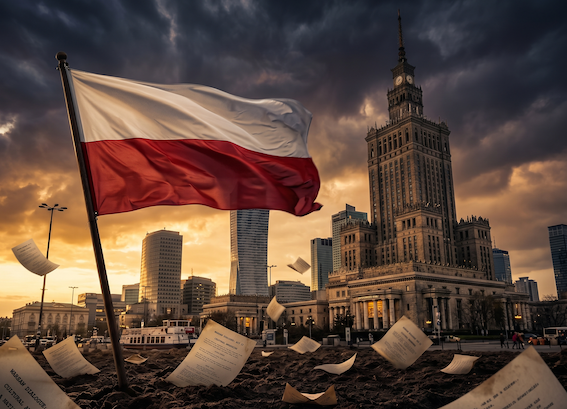
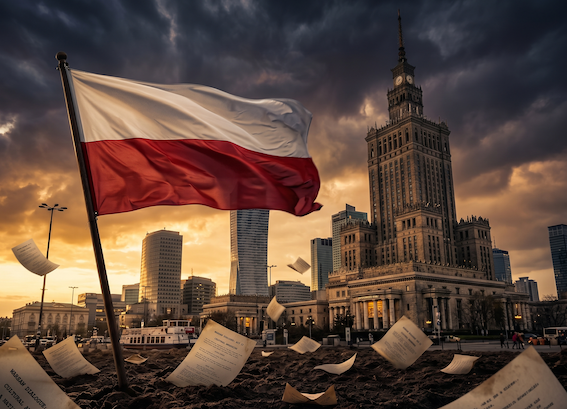
Poland increased film production by 34% in 2024. Netflix chose Warsaw as its regional
headquarters for Central and Eastern Europe, investing over $110 million in original Polish content.
Director Pawel Pawlikowski won the Oscar for Ida and received a nomination for Cold War.
Agnieszka Holland's Green Border won Best Film at the Polish Film Awards 2024 and sparked an
international debate.
The secret: a generation of filmmakers with something urgent to say, backed by a streaming giant that noticed
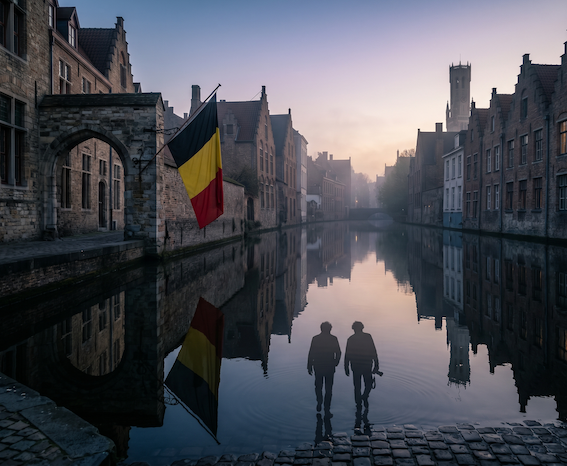
#2 — BELGIUM — +41%
Belgium's film production jumped 41% in 2024. The Dardenne Brothers hold the record for most
films submitted to represent Belgium at the Oscars — and two Palme d'Or to their name. Lukas
Dhont brought Close to Cannes in 2022, winning the Grand Prix. Directors Adil El Arbi and Bilall
Fallah went from Brussels street films to directing Bad Boys for Life with Will Smith.
The secret: a small country with an outsized appetite for co-productions and a culture that rewards creative risk.
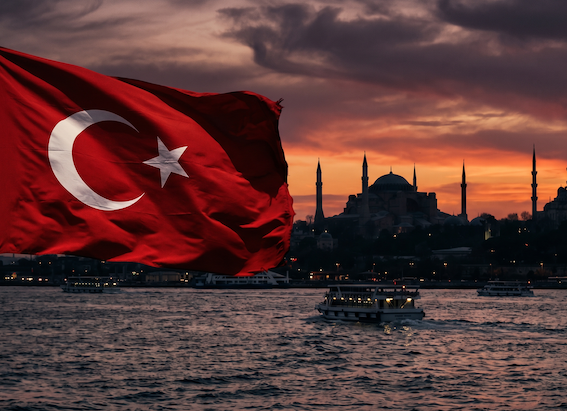
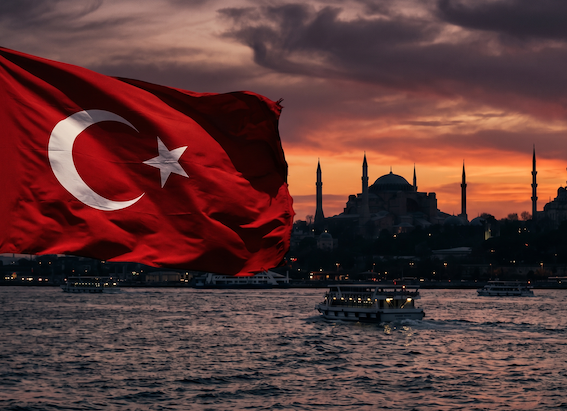
#1 — TURKEY — +52%
Turkey led European growth in 2024 with a 52% increase in film production — 76 new titles in a
single year. The Turkish film industry ranks second only to the US in exporting TV series, reaching
at least 150 countries worldwide. Director Nuri Bilge Ceylan won the Palme d'Or at Cannes 2014 for
Winter Sleep. A movement scholars call 'New Turkish Cinema' has brought directors like Ceylan,
Fatih Akin and Semih Kaplanoglu to the most prestigious stages in the world — Cannes, Berlin,
Venice.
The secret: a culture of storytelling so deep it doesn't need to imitate anyone.
SUMMIT 🇮🇹 🇫🇷 🇵🇱 🇬🇧 🇪🇸
Criteria: Consolidated cinematic power — measured across three combined factors: total production volume, global impact of works (international awards, streaming reach), and capacity to attract foreign investment. Not speed. Weight.
Sources:
European Audiovisual Observatory — Key Trends 2024 (obs.coe.int)
Netflix Official Press Releases — Tres Cantos Hub Madrid (about.netflix.com)
Hollywood Reporter — Spain as European Production Hub (hollywoodreporter.com)
WIPO — Global Film Production Rankings 2023/2024 (wipo.int)
#5 — ITALY
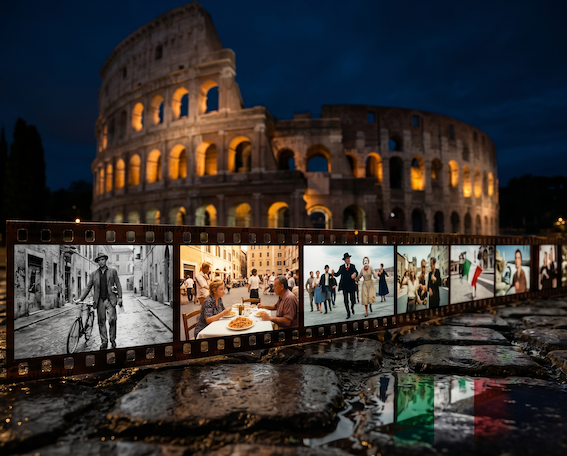
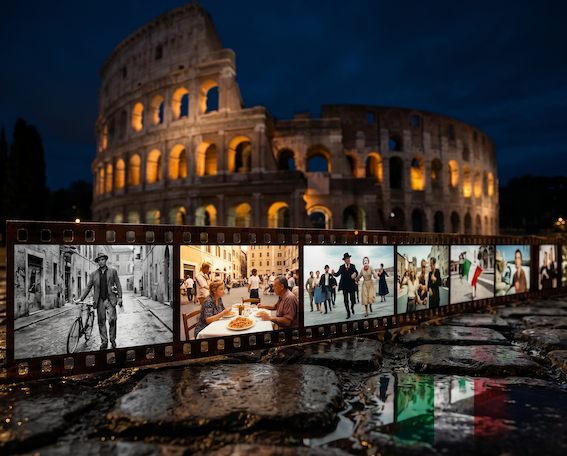
Ttaly retained its position as the largest film producer in Europe by volume, with 350 films in 2024 —
its highest output in over two decades. The box office soared 61.6% in a single year. Director Paola
Cortellesi's C'e ancora domani became a cultural phenomenon, selling over 5 million tickets
domestically. The country that gave the world neorealism, Fellini and Sorrentino still knows how to
make films that matter. And international productions continue to choose Italian locations, studios
and crews for their visual power.
The secret: a storytelling tradition so deep it regenerates itself in every generation.
#4 — FRANCE
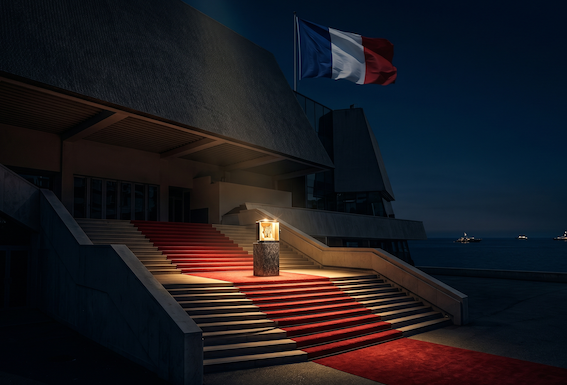
France remains the historic architect of European cinema — the country that invented the language.
With Cannes as the most powerful festival in the world, French cinema sets the cultural agenda
even when it does not top the box office. Directors like Jacques Audiard, Claire Denis and Celine
Sciamma are redefining what authorship means in the streaming era. The Centre National du
Cinema provides structural public funding that no other country matches in sophistication.
The secret: the state decided cinema was culture, not just entertainment — and built an industry
around that decision.
#3 — POLAND
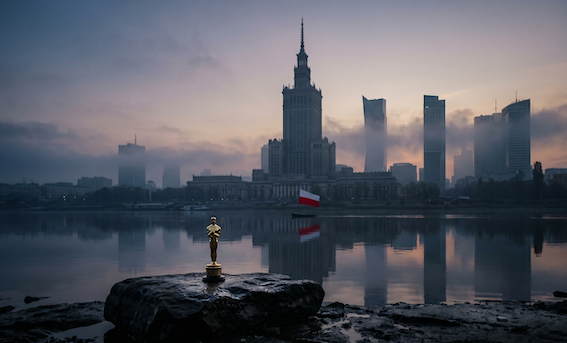
Poland punches above its weight with consistent precision. Pawel Pawlikowski won the Oscar for
Ida (2015) and received a second nomination for Cold War (2019). Agnieszka Holland's Green
Border won Best Film at the Polish Film Awards in 2024 and screened at festivals across Europe
and North America. Netflix chose Warsaw as its Central and Eastern European headquarters,investing over $110 million in Polish originals. A country with something urgent to say — and the
filmmakers to say it.
The secret: political urgency makes for great cinema. Poland has never lacked for material.
#2 — UNITED KINGDOM
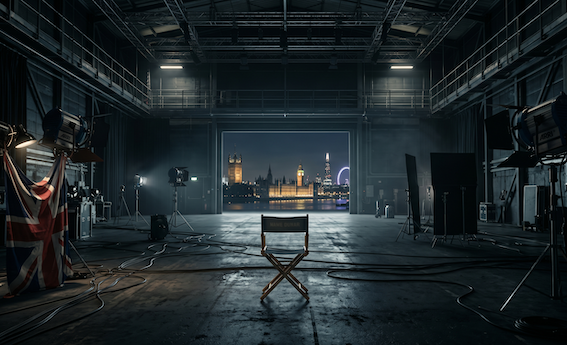
The UK is where the money is. A historic high of £6.27 billion in combined film and high-end TV production spending in 2022. A 40% tax relief that draws Hollywood to London studios year after year. Directors like Christopher Nolan, Steve McQueen and Sam Mendes carry the British flag to every major festival and awards ceremony.
Production added 53 new titles in 2024 alone — a 22%increase.
The UK is not just making films: it is the infrastructure backbone of European cinema.
The secret: British cinema learned to be both local and global — and charged accordingly.
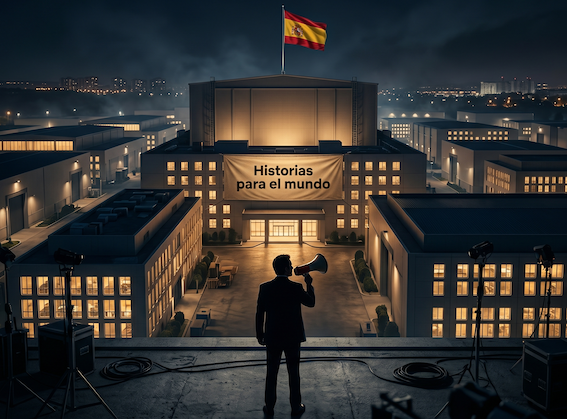
#1 — SPAIN
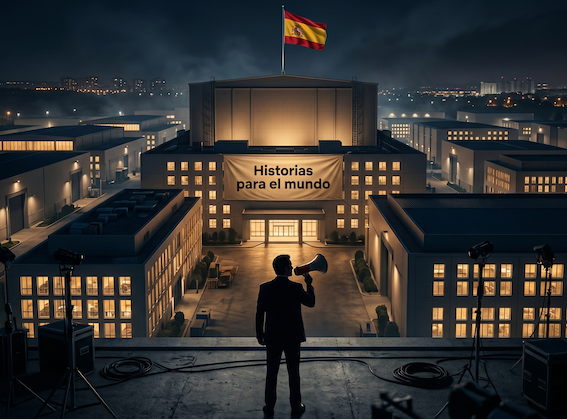
Spain was right where everyone expected it. Netflix chose Madrid for its first and largest production
hub outside the United States — the Tres Cantos campus, with 10 soundstages and over 22,000
square meters of facilities, housing productions distributed in 190 countries.
La Casa de Papel became the most-watched non-English language show in Netflix history. Elite, Berlin, Intimidad —Spanish storytelling has become a global export. Spain ranked first in the European Union for film production for three consecutive years.
Pedro Almodovar, Alex Pina, and an entire generation ofdirectors, writers and crews have made Madrid the creative capital of European content.
The secret: Spain did not wait for the world to discover it. It went out and told its own stories —
loudly enough for everyone to hear.
AI ON SET 🤖
What Artificial Intelligence Does in Cinema Today
If you work in film — as a director, production designer, composer, editor, casting director — this list is about your department.
Read it as information, not as a verdict.
It is 2026. Artificial intelligence does not knock on the door of the film industry anymore — it is already inside, sitting at every department table.
No opinion here. Just a list of what it actually does, right now.
1. Screenplay — analyzes narrative structures, suggests dialogue, generates script drafts
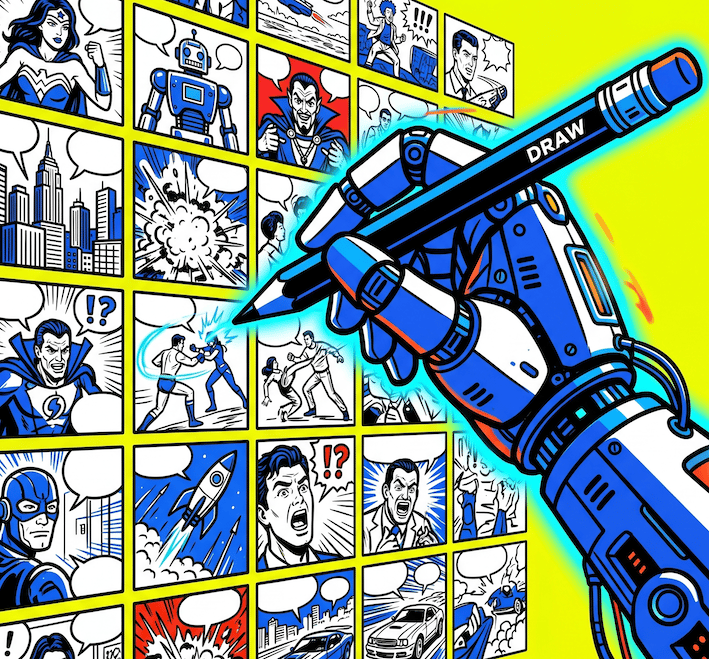
2. Storyboard — generates images from text descriptions in minutes, replacing weeks of work
3. Pre-visualization — entire previz sequences without a human animator
4. Production Design — generates visual concepts, mood boards and set references from a brief
5. Predictive Casting — analyzes market data to suggest which actors maximize commercial performance


6. De-aging and VFX — reconstructs faces, bodies and environments at cinematic quality and reduced cost
7. Dubbing and voice cloning — clones an actor's voice in any language, preserving tone and
emotion
8. Assisted editing — suggests cuts, rhythm and structure based on thousands of analyzed films
9. Score composition — composes original music for a scene in minutes
10. Distribution and marketing — predicts a film's success before release, optimizes trailers
and posters for specific audiences


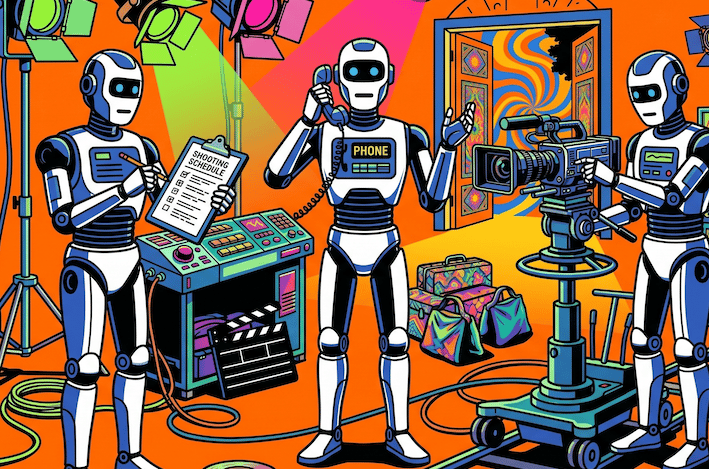
11. Script Breakdown & Scheduling — reads the screenplay and automatically generates shooting schedules, day-out-of-days and call sheets in minutes
12. Set Supervision — monitors continuity in real time on set, flagging inconsistencies between shots before the editor finds them in post
13. Crowd Simulation — generates realistic digital crowds for scenes that would require
thousands of extras, at a fraction of the cost
14. Legal Clearance — scans scripts, locations and props for potential copyright or trademark
issues before production begins
15. Pitch Development — analyzes market trends and audience data to suggest which stories have the highest commercial potential before a single word is written
Wait. Does something feel missing from this list? Leave a comment.
You probably know something this list does not.

SHIPS ON THE SHORE
The Language of the Ship
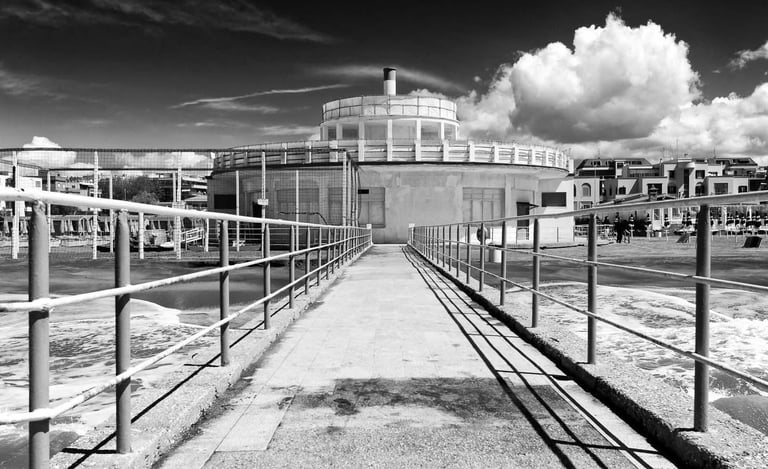
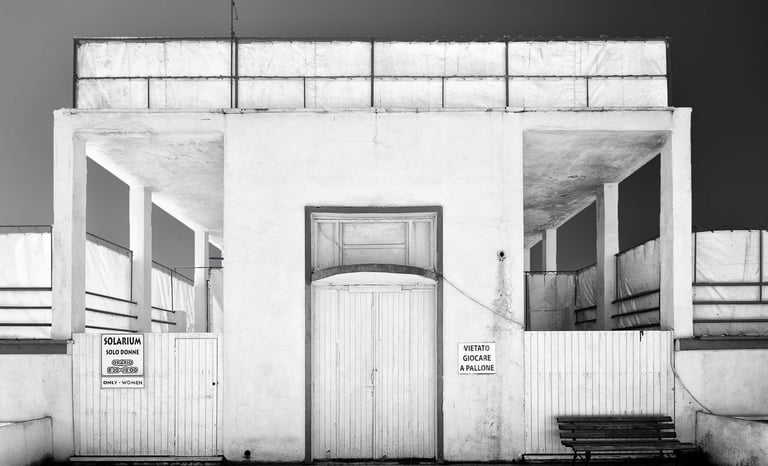
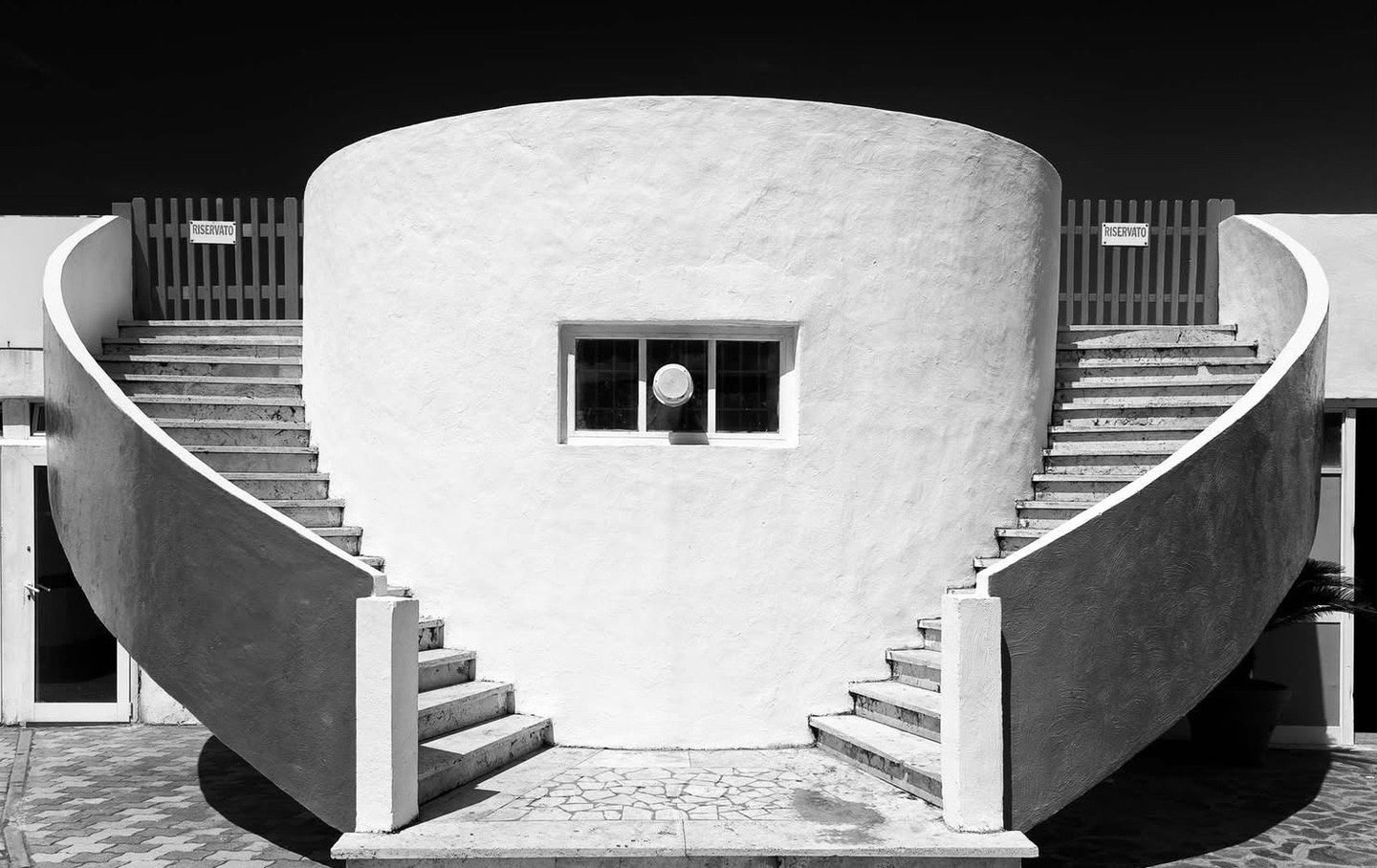
During the 1930s, Ostia's bathing establishments drew clear inspiration from the maritime world . Ship railings, pilot houses, flagpoles and portholes became the decorative language of an entire coastline. This was not a stylistic whim. It was a coherent vision: the villas and buildings by Adalberto Libera, Giuseppe Vaccaro and Luigi Moretti created an urban plan perfectly aligned with the principles of European rationalist architecture.
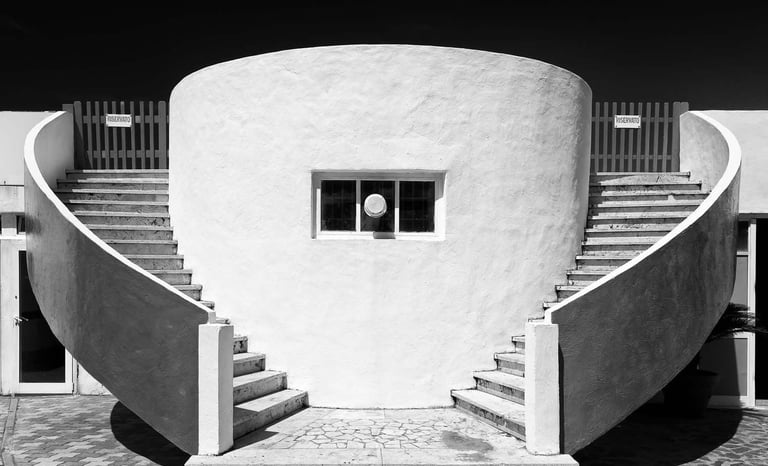
Clean lines, white volumes, horizontal balconies that cut through the air like the decks of a transatlantic liner. The Villino on Lungomare Duilio by Adalberto Libera features a cylindrical staircase tower rising above the rooftop terrace with distinctly naval characteristics.
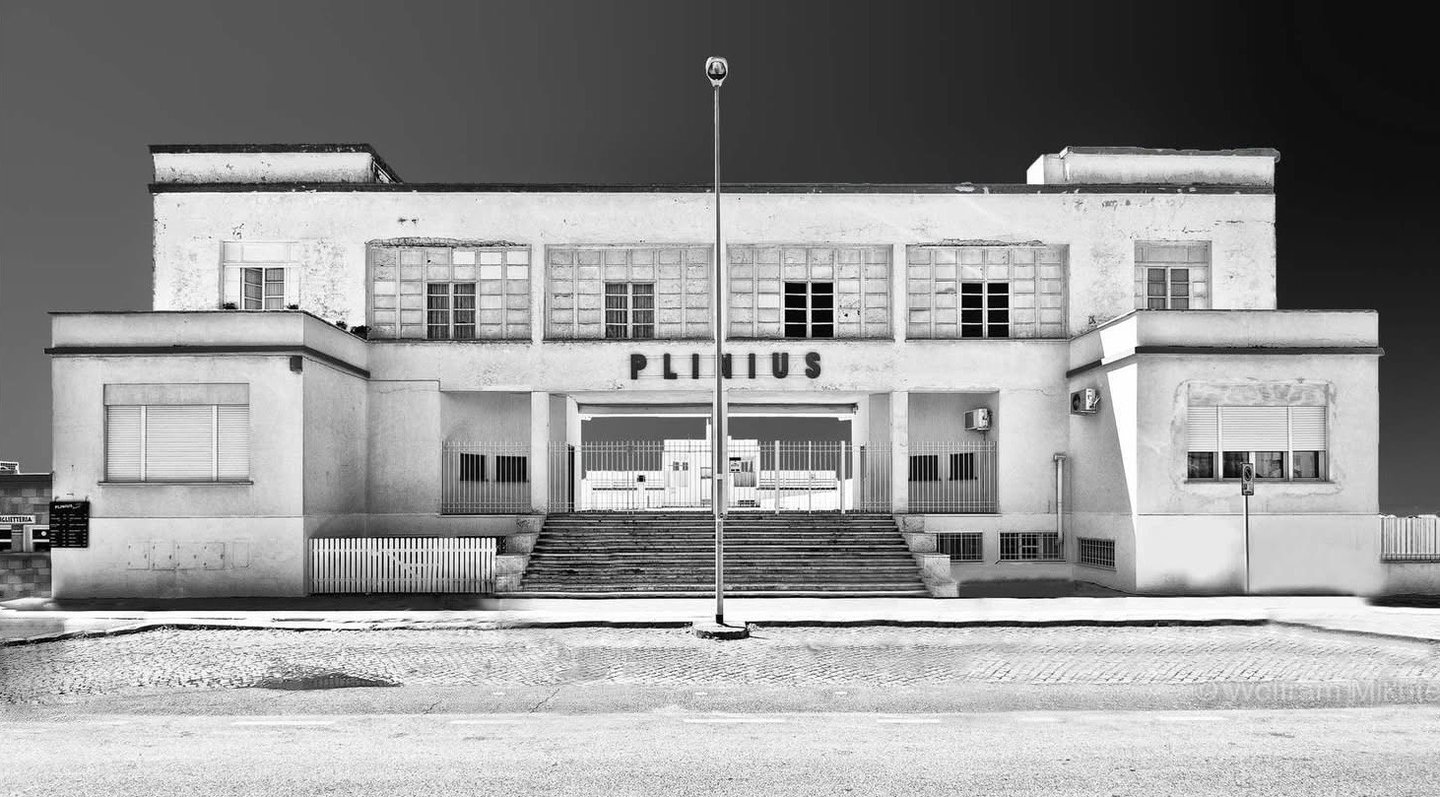
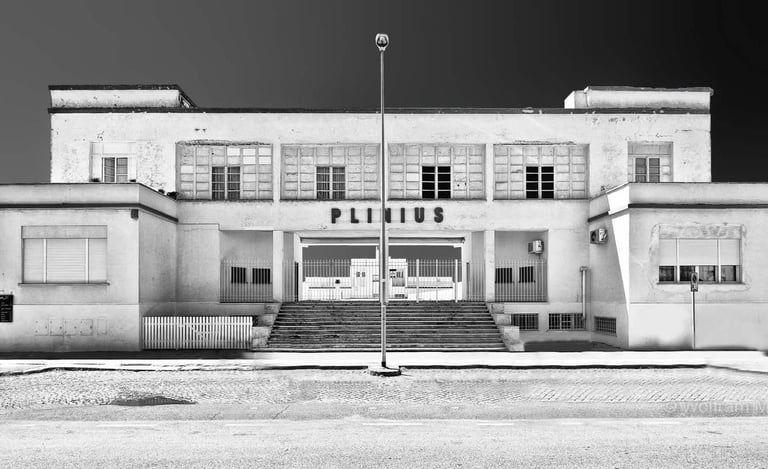
The Rationalist Architecture of Ostia and Its Cinematic Life.
Imagine buildings that look like ocean liners, docked permanently on the sand, never to sail.
That is exactly what you find walking along the seafront of Ostia Lido, twenty minutes from Rome.
In the1930s, a group of architects built something unlike anywhere else in Europe:
a city that dreams ofthe sea even while standing on it..
The Plinius
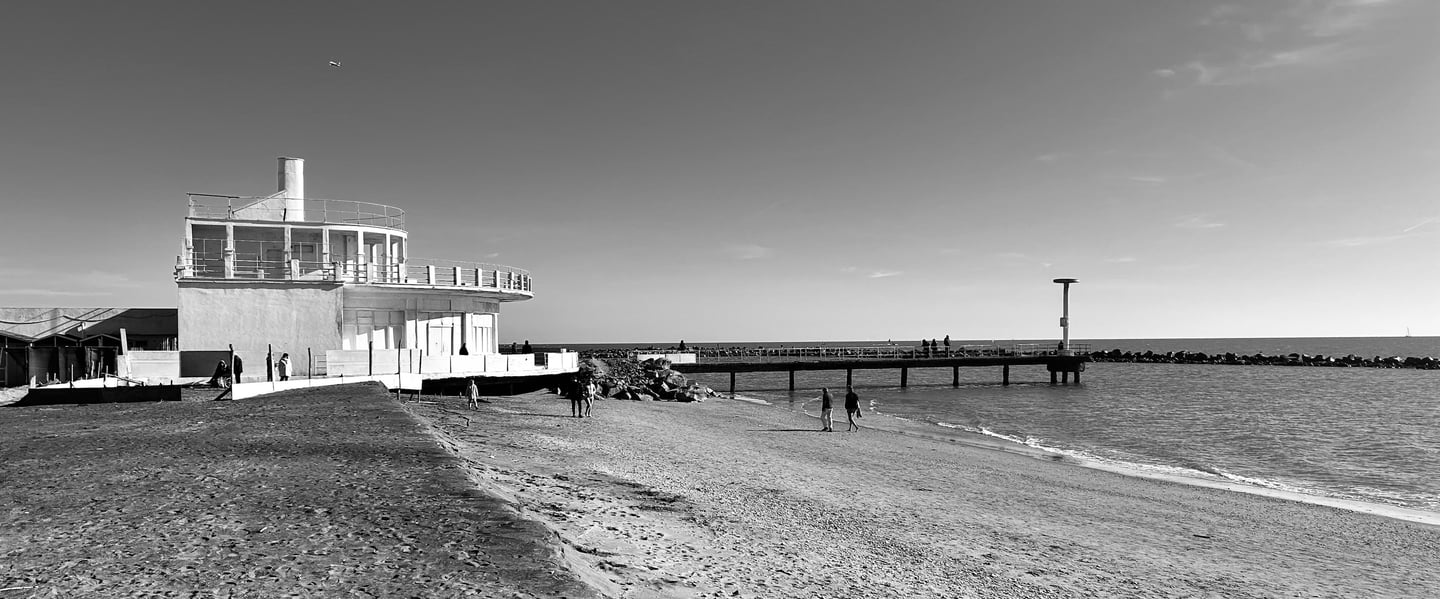
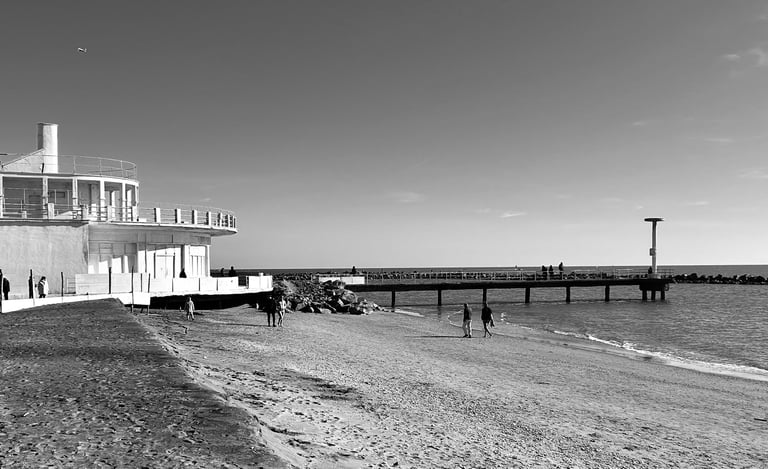
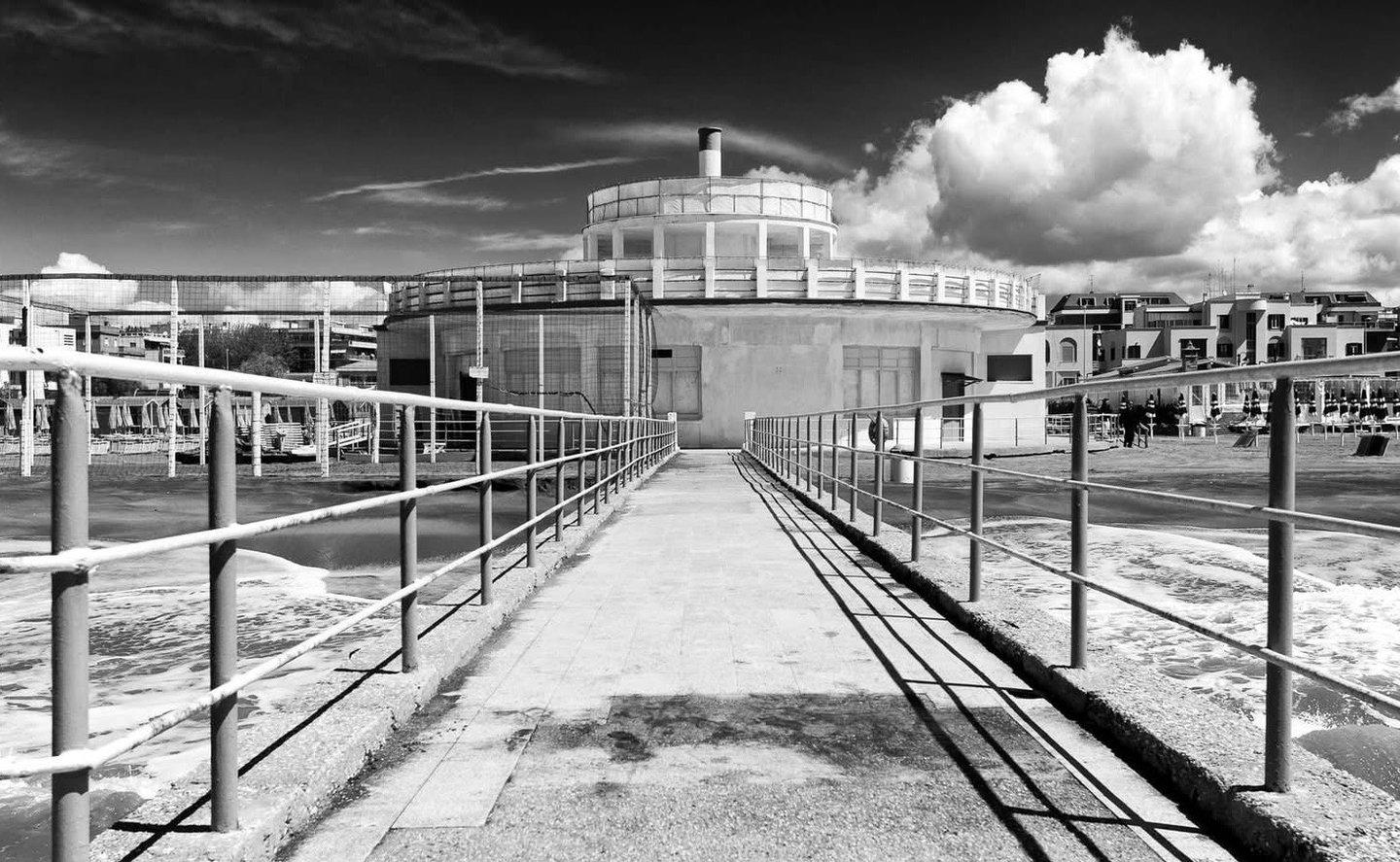
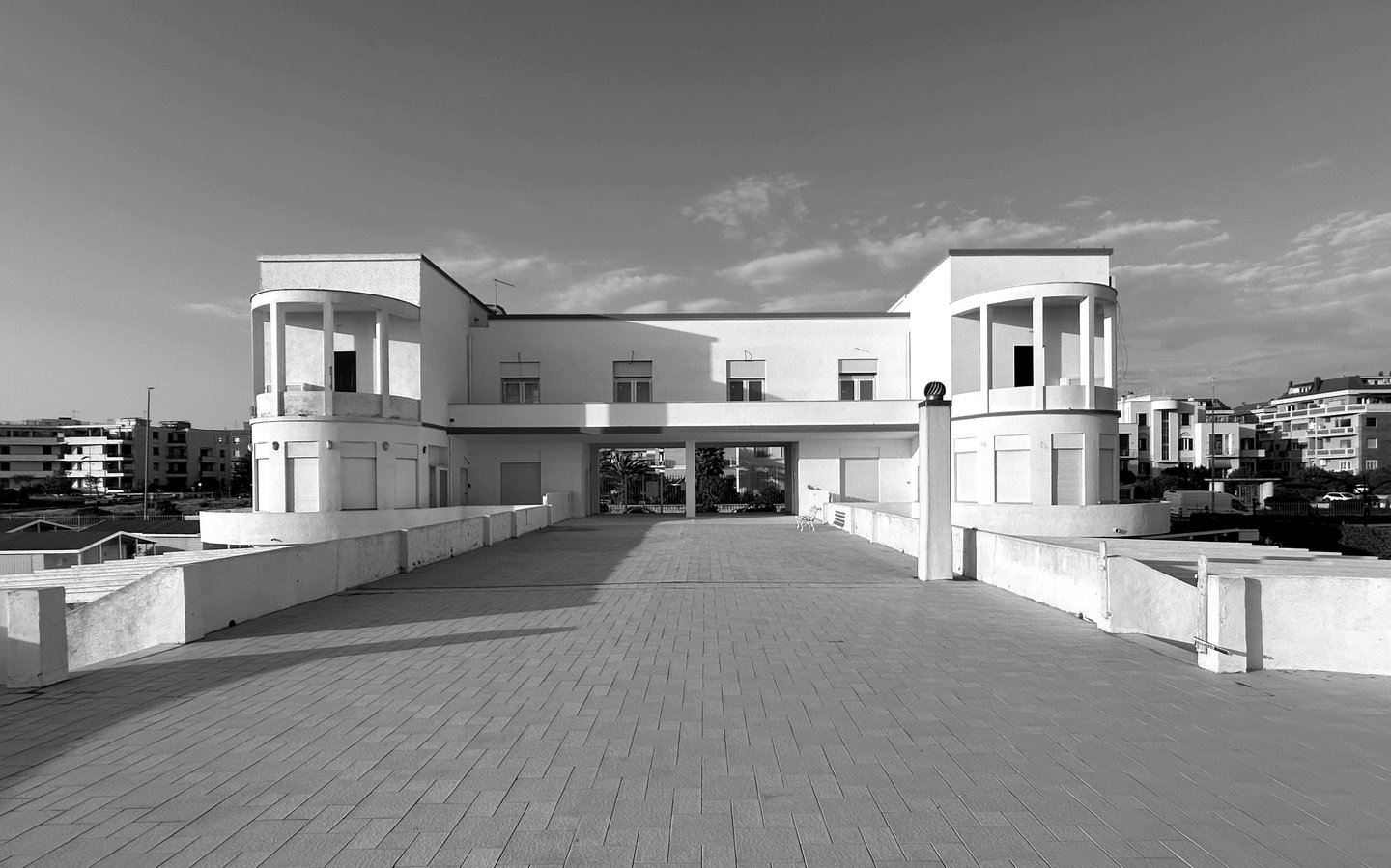
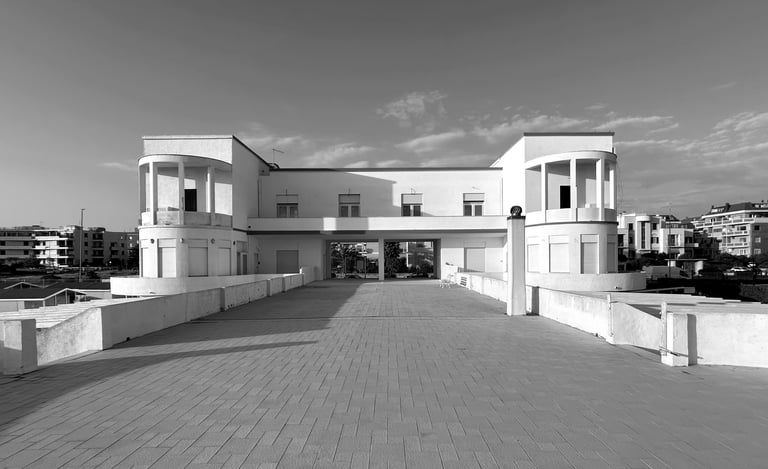
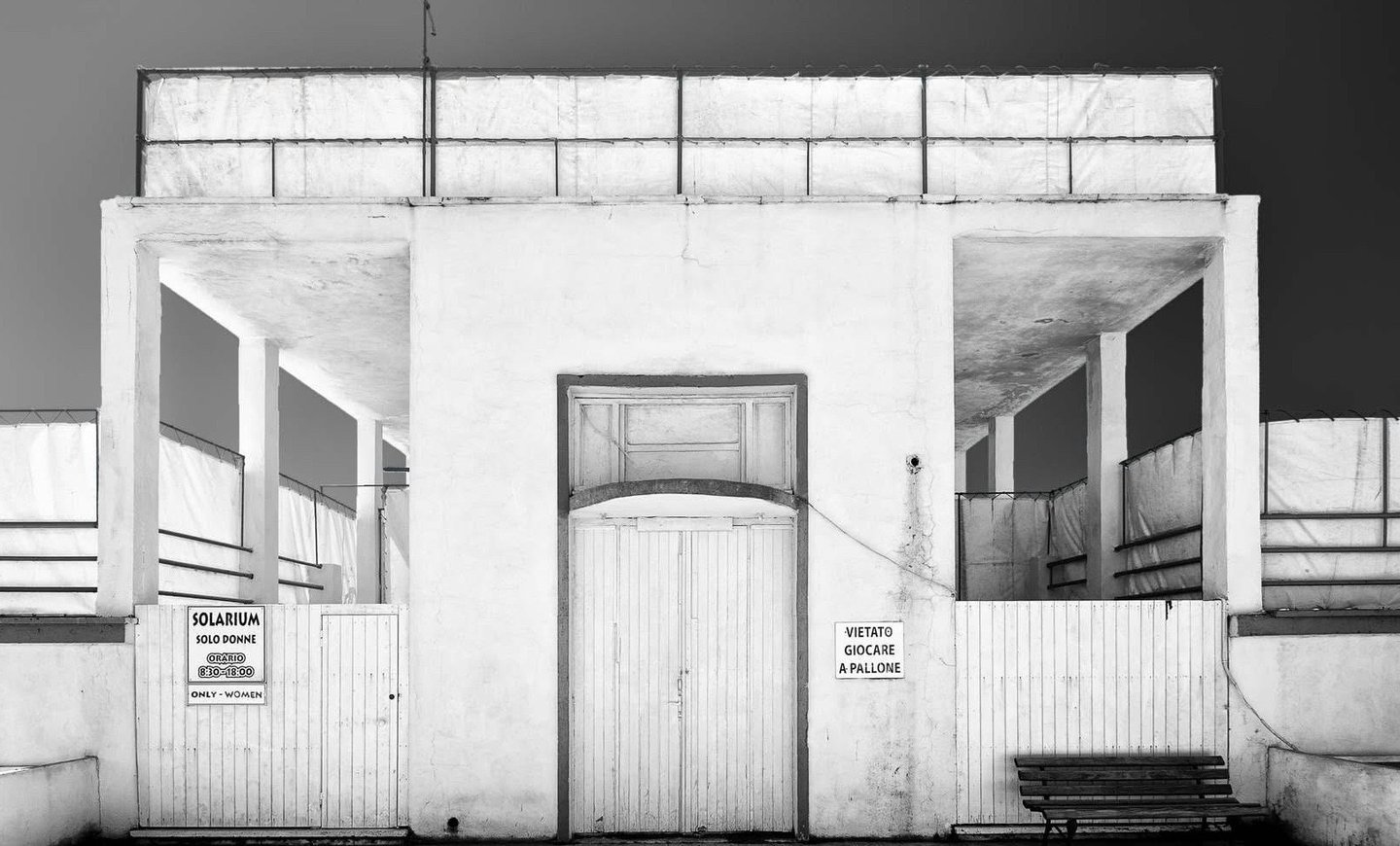
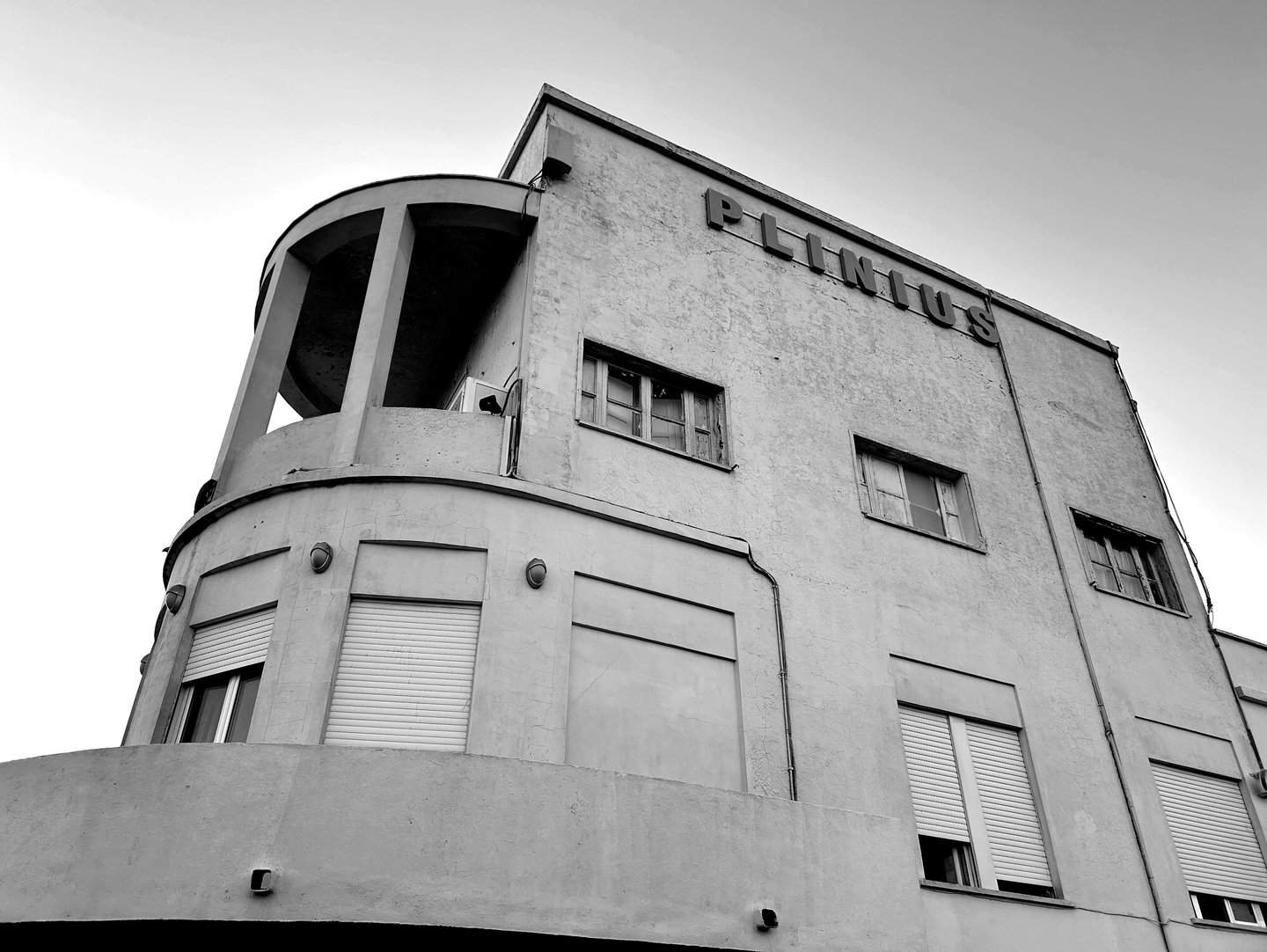
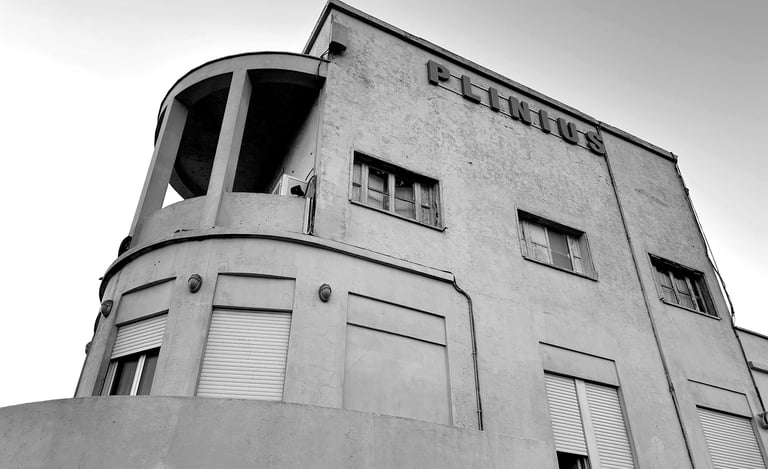
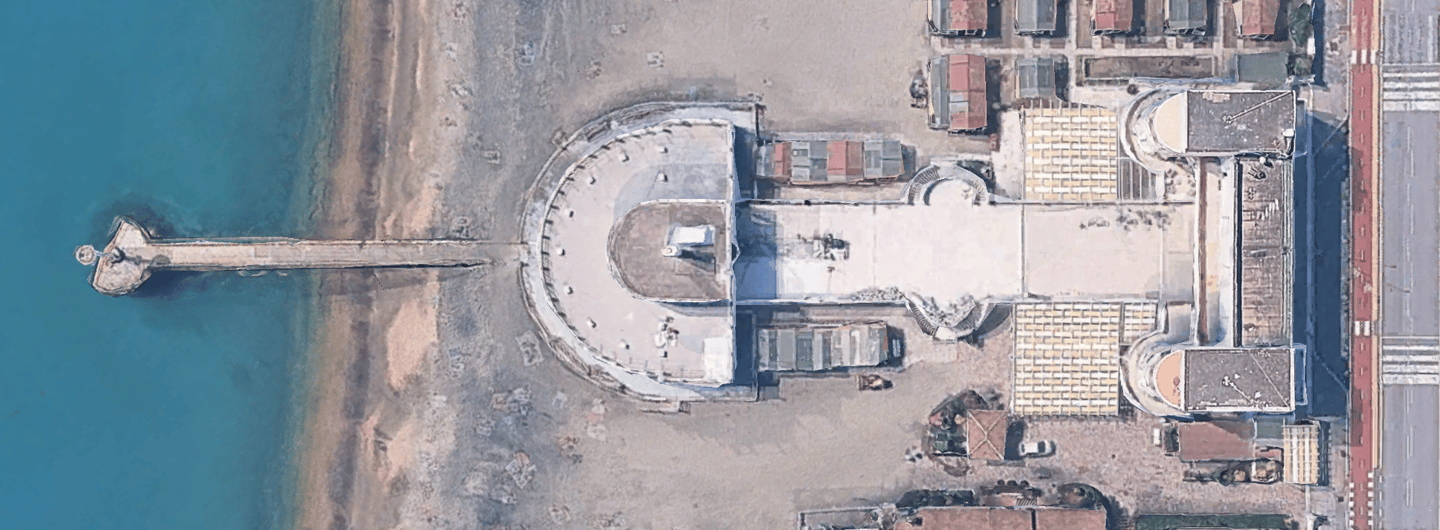
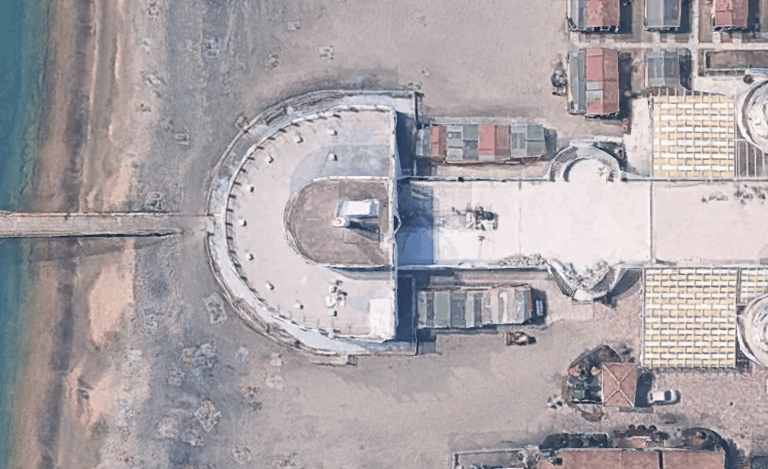
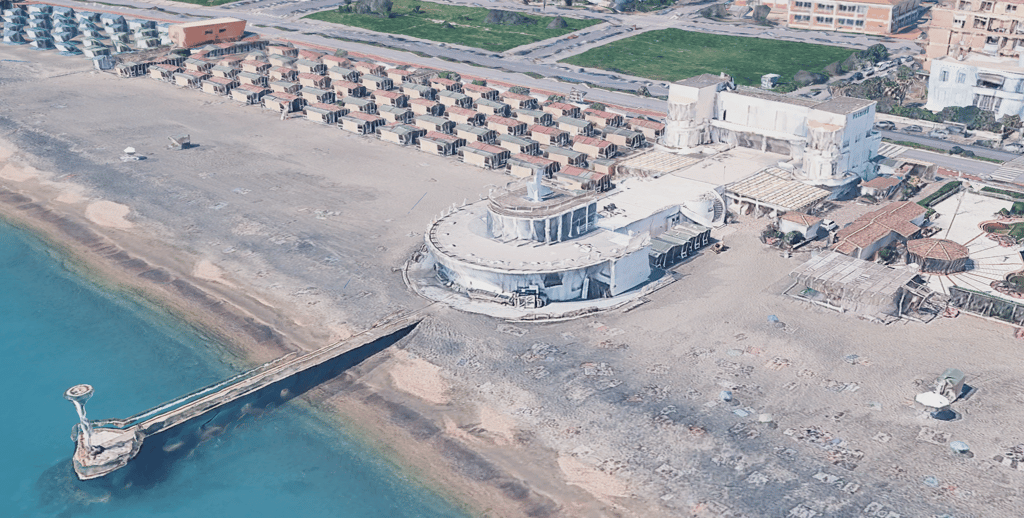
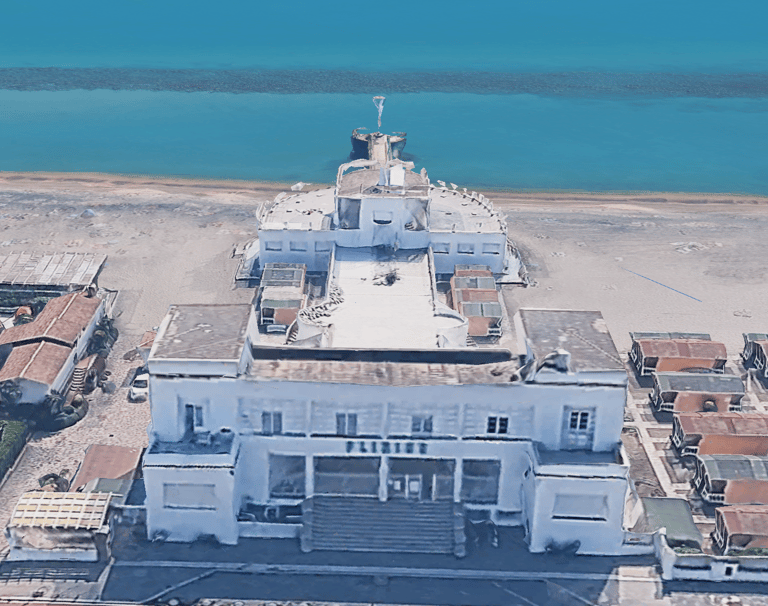
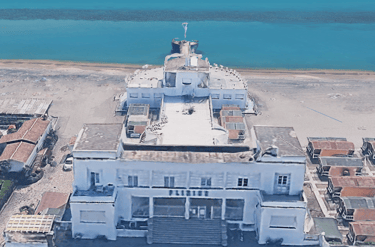
The Plinius bathing establishment was built in 1933, designed by architect Leopoldo Botti, in a stretch of coastline reserved for high-end customers, where preserving the views toward both the sea and the pine forest of Castelfusano was mandatory. The choice of details is clearly drawn from naval models. Glass bricks, horizontal tube balustrades, the form of the openings.
It is still there today, on the lungomare, unmistakably itself: half building, half ship, permanently anchored to the sand.
A natural film set
Ostia has always attracted filmmakers drawn to its atmosphere melancholic, cinematic,suspended between elegance and abandonment. Pier Paolo Pasolini used the streets and the seafront as the backdrop for films that described the human marginality of the Roman coast.
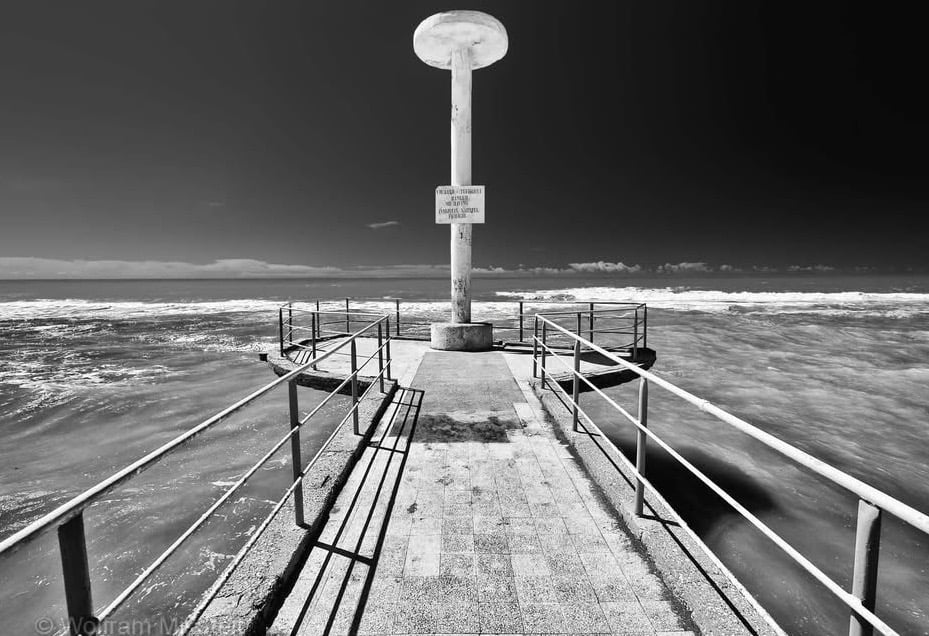
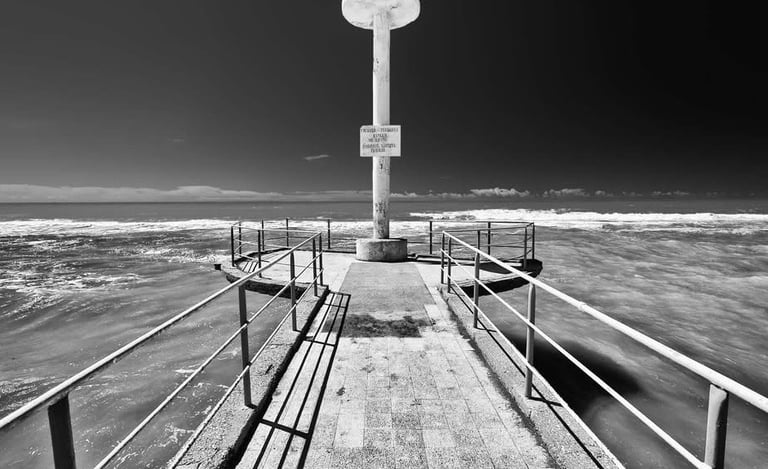
The opening scenes of Amore Tossico by Claudio Caligari (1983) were shot on the Pontile di Ostia .
The same pier that stands beside the Plinius. More recently, the Plinius itself was used as a location for the film Sono Tornato (2018) by Luca Miniero.
A set designer's dream: ready-made, layered, unrepeatable
What survives
These buildings are now nearly a century old. Some have been restored, some neglected, some transformed beyond recognition.
But the silhouette remains, the horizontal lines, the curved terraces, the suggestion of a vessel that never moved. As a production designer, walking that lungomare is a lesson in visual storytelling. A building that tells you where it is, what era it belongsto, and what it dreamed of being, all at once.
FOUR SEASON IN A STUDIO,
THE GENIUS OF NON E' LA RAI
The Mah Behind The set
Born in Rome in 1958, Bocchini is an architect and set designer who has spent over thirty years shaping the visual identity of Italian television. His credits read like a history of the medium: Affari tuoi, L'Eredità, Tale e quale show, Soliti ignoti, La Corrida. He has designed the stage of the Sanremo Festival five times — 2015, 2016, 2017, 2025 and 2026. He is, by any measure, one of the most important scenic minds Italy has ever produced.
But his most extraordinary work — the one that still holds up as an act of pure invention — was done in a small television studio in the early nineties, with no LED walls, no digital projection, no technology beyond paint, light, fibreglass and imagination.
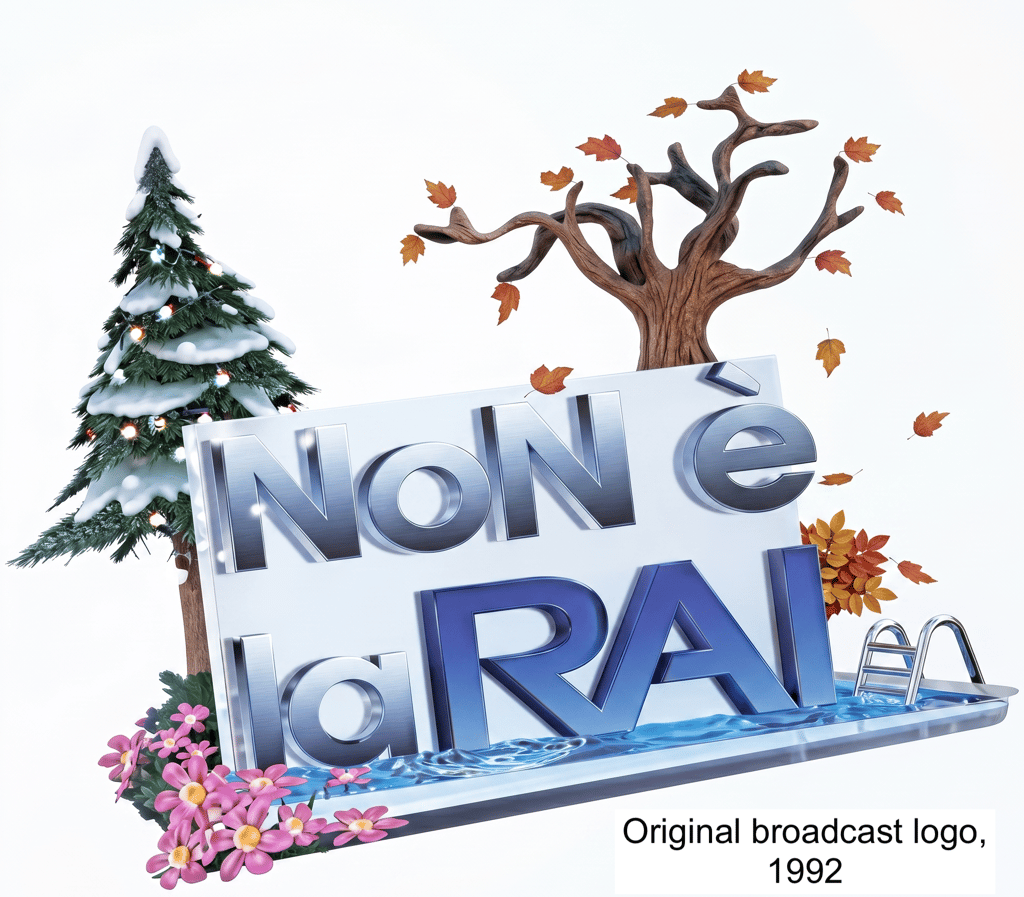
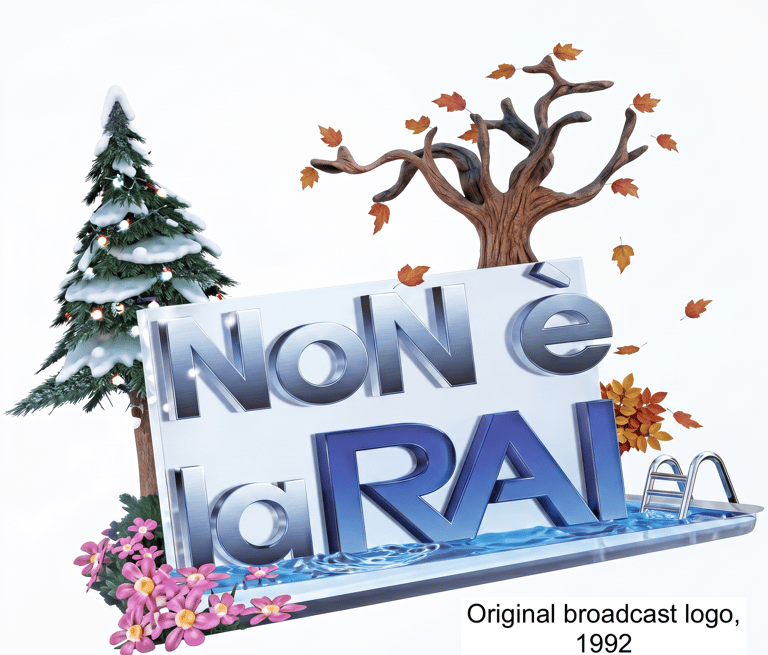
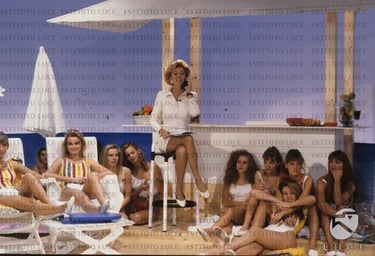
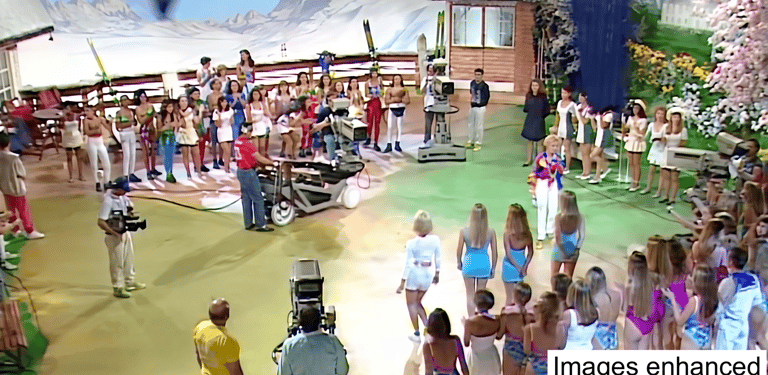
In 1992, Italian television did something it had never done before — and hasn't done since. A variety show called Non è la Rai, created and directed by Gianni Boncompagni and hosted by Enrica Buonaccorti, launched in the late morning slot with a simple but explosive formula: one presenter, around a hundred unknown and wildly energetic girls, and a set that defied everything anyone thought a TV studio could be.
The show became a phenomenon. But behind the on-screen chaos, there was a quiet architectural intelligence at work. Its name was Riccardo Bocchini.
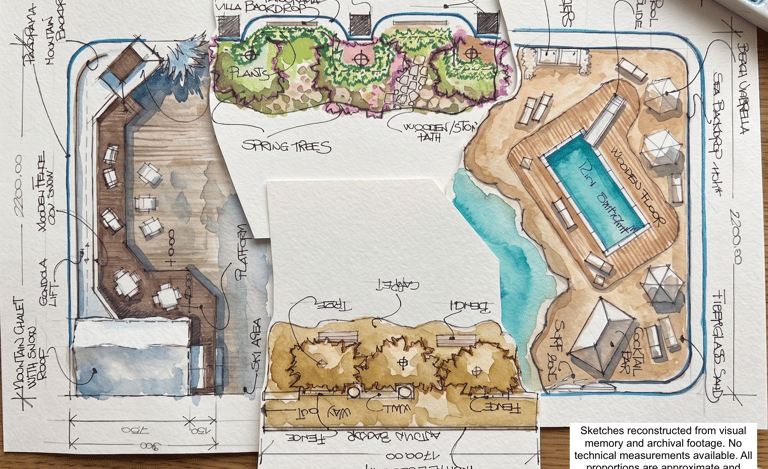
One Studio, Four Seasons
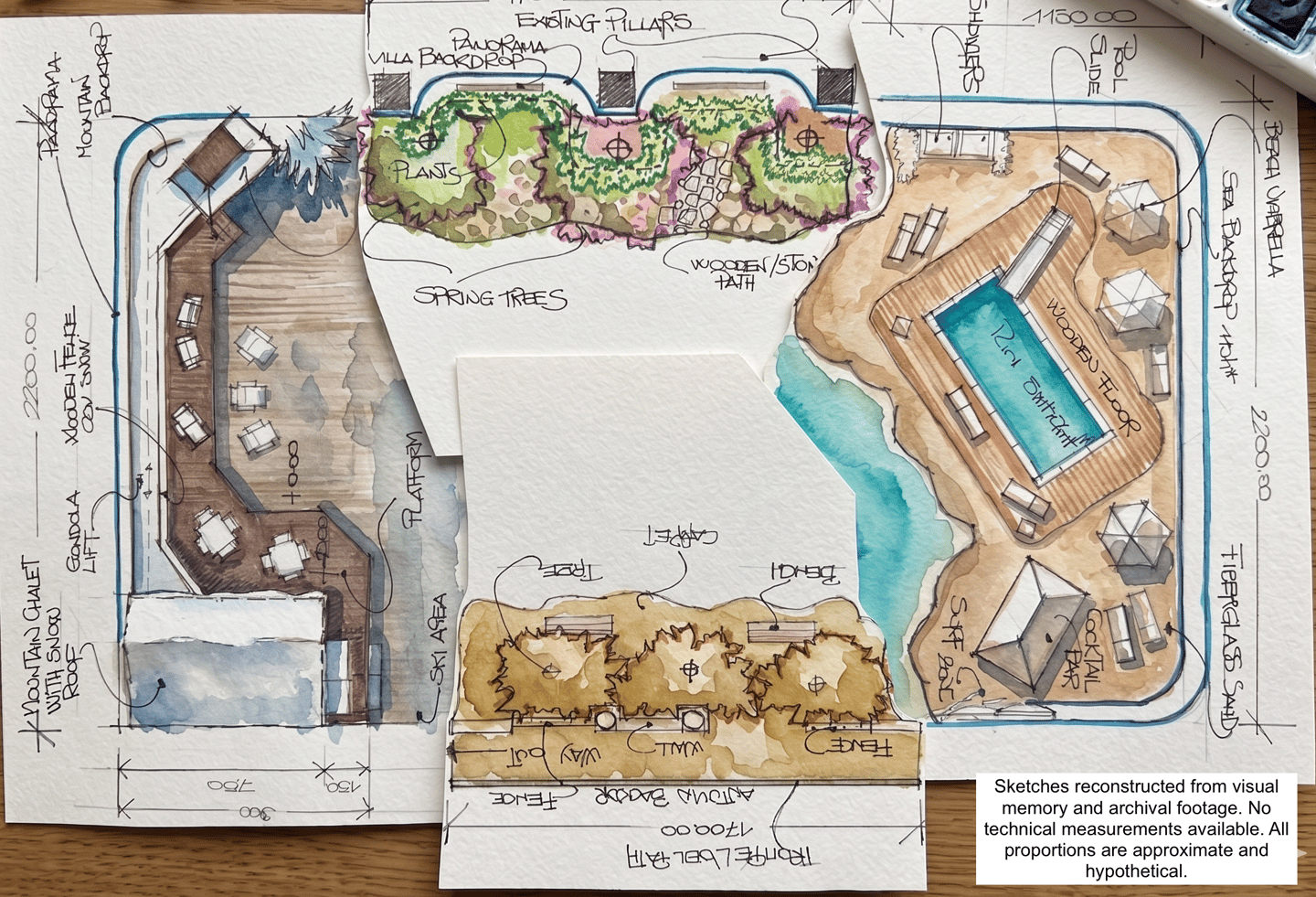
Boncompagni had a signature visual language: wide-angle lenses, balconies, infinite perspectives, painted backdrops of the Roman skyline or the open sea. He knew how to make small spaces feel enormous. And for Non è la Rai, he gave Bocchini a brief that was, on paper, almost absurd: design a single studio divided into four seasons — summer, spring, winter and autumn — all coexisting simultaneously, all functional, all believable.
Bocchini delivered something that went far beyond the brief.
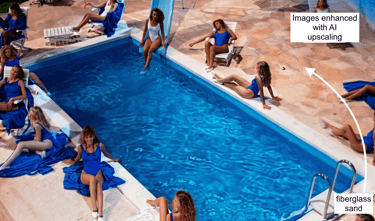
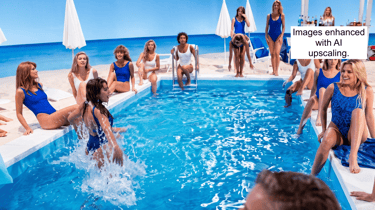
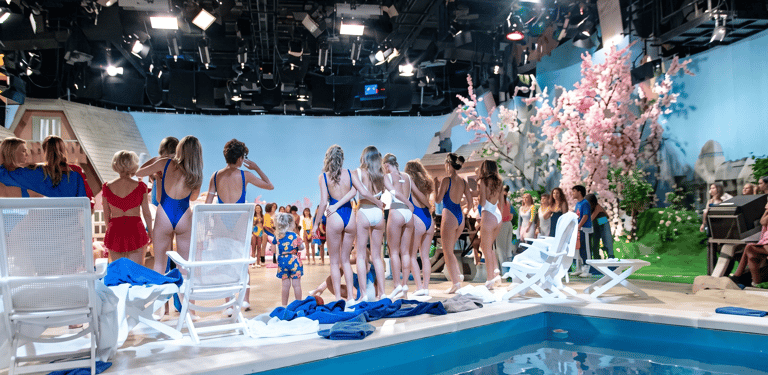
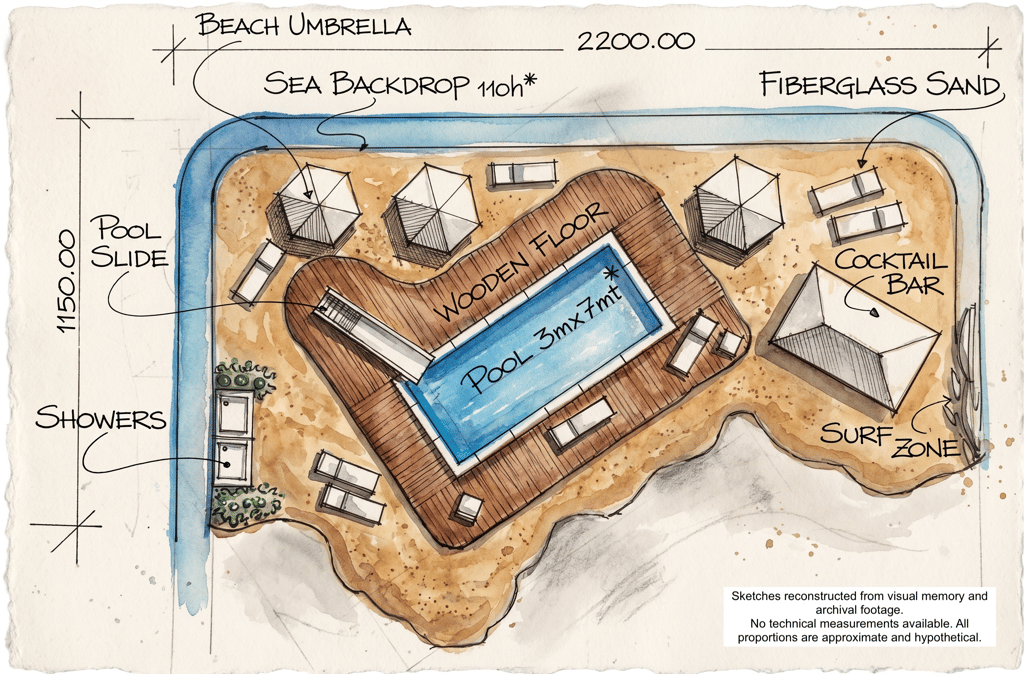
The entire studio floor was raised on a platform to accommodate a fully functioning swimming pool — the first ever built inside an Italian television studio. That pool alone sent the ratings soaring. But the pool was just the beginning.
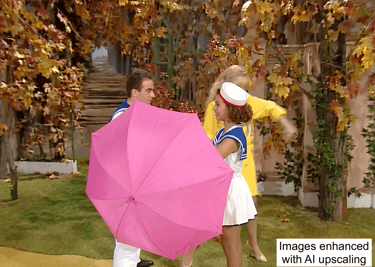
The floor itself was colour-coded by season: sandy yellow for summer, light green for spring, deep green for autumn, warm brown for winter. Four zones, four palettes, converging at the centre of the studio into a single harmonious whole.
Summer
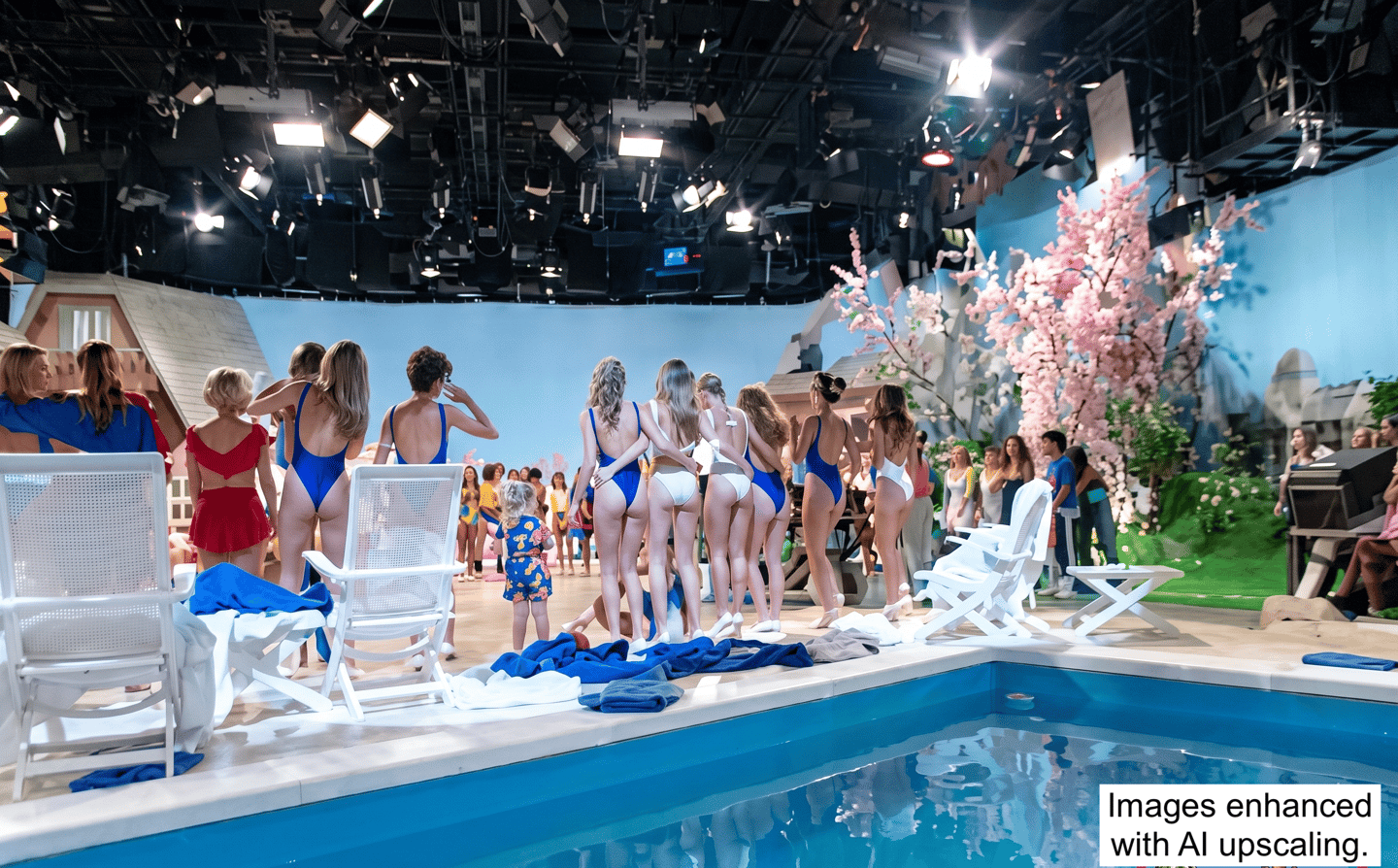
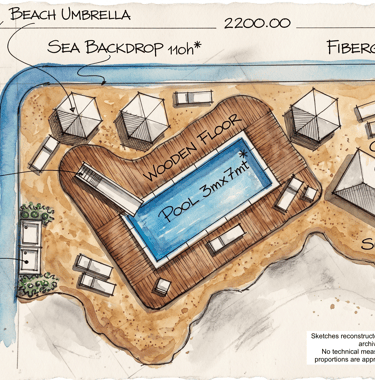
The summer zone was a complete beach resort. A 3×7 metre pool, roughly one metre deep, with a water slide feeding directly into it. Beach umbrellas, outdoor showers, a cocktail bar, sun loungers. The sand — and this is where Bocchini's thinking becomes remarkable — was not real sand. It was a fibreglass surface engineered to look exactly like beach sand. Seamless, convincing, practical.
Behind it all, a painted sea cyclorama approximately 110 centimetres high, backlit to give it warmth and depth. The horizon line was hand-painted. Everything was hand-painted. The light did the rest.
Spring
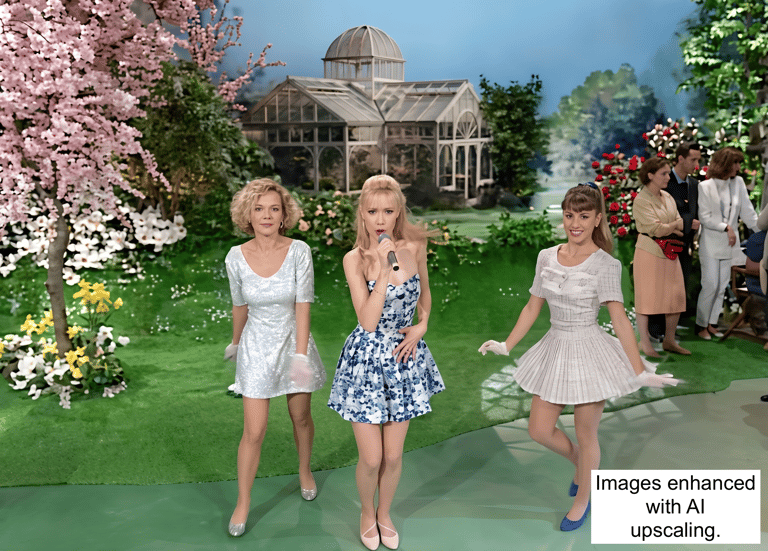
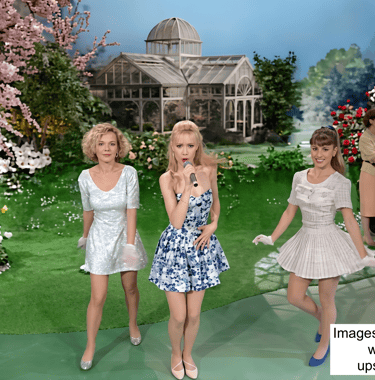
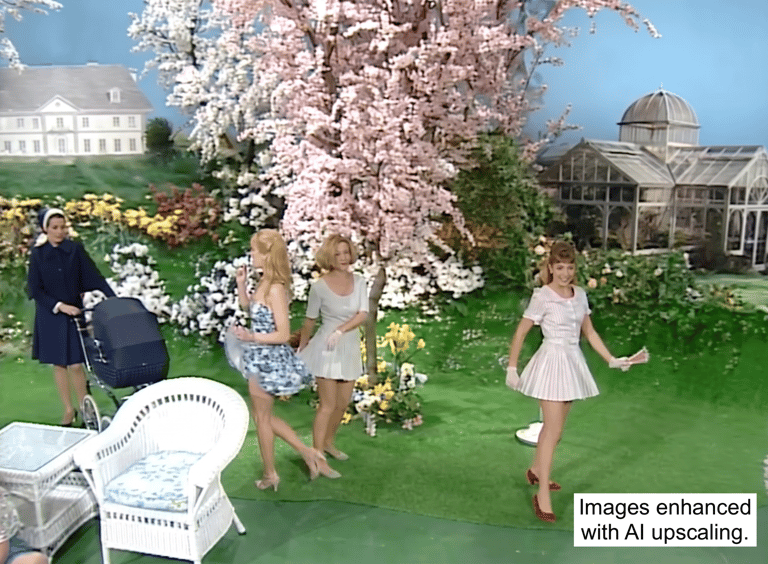
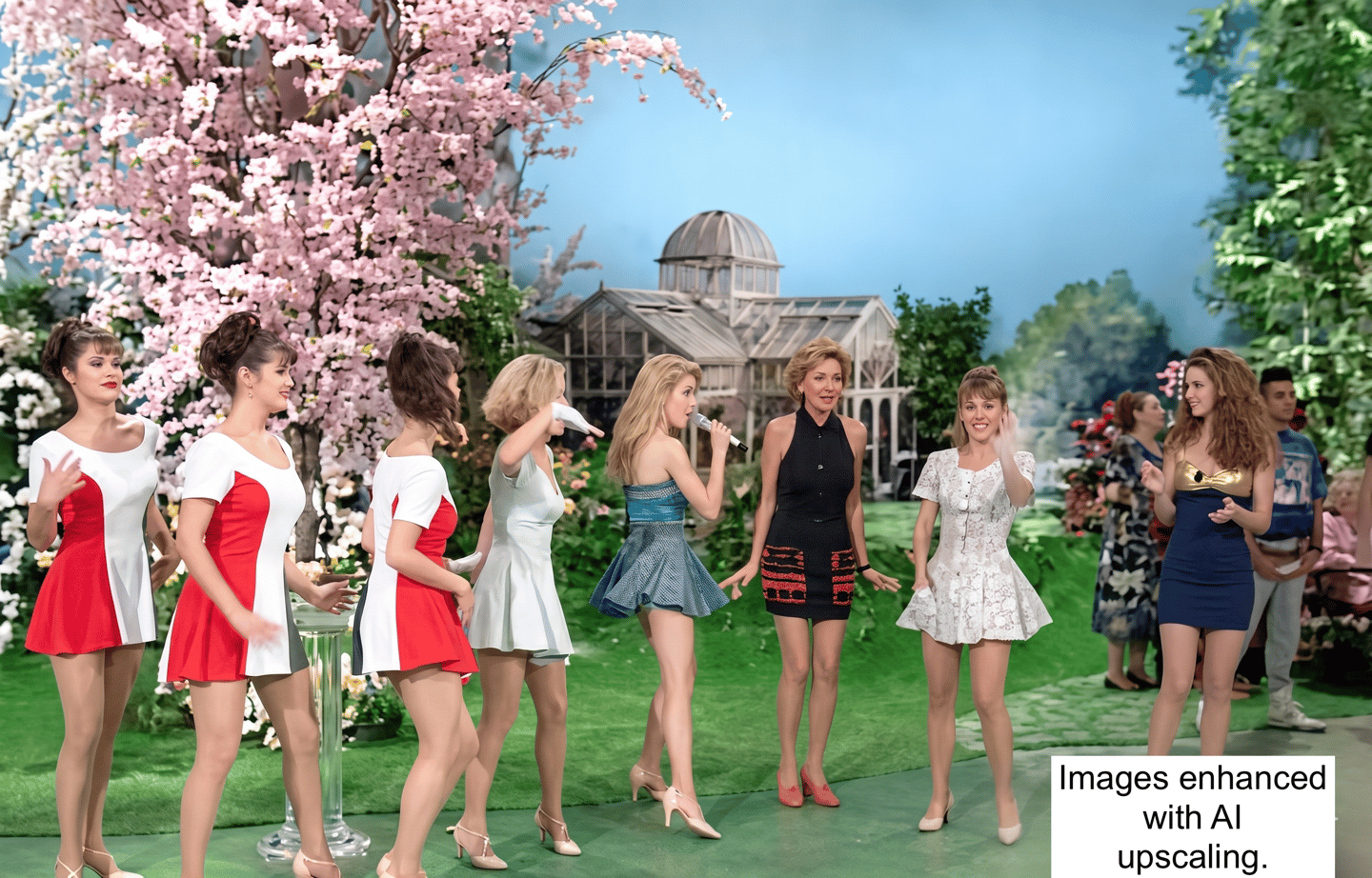
The spring zone presented a structural problem: load-bearing studio columns ran straight through it. Most designers would have worked around them. Bocchini worked with them — pushing the scenic depth between the columns rather than across them, creating a series of receding planes that suggested a French greenhouse or an English country garden.
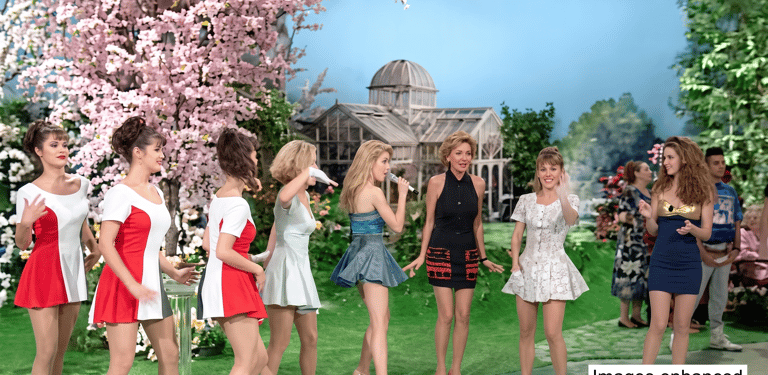
Cherry trees, walnut trees, peach trees, all in full painted bloom. A green carpet on the floor that rose gently like a theatre rake, cut at a precise height and finished with artificial flowering plants — prop plants that dissolved seamlessly into the painted greenhouse backdrop and villa scenic behind them. The result was extraordinary depth in a space that had almost none.
Winter
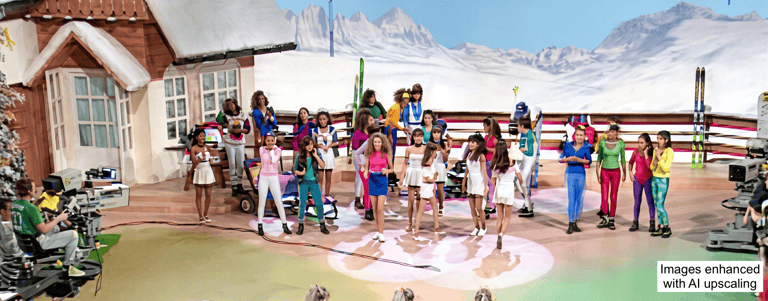
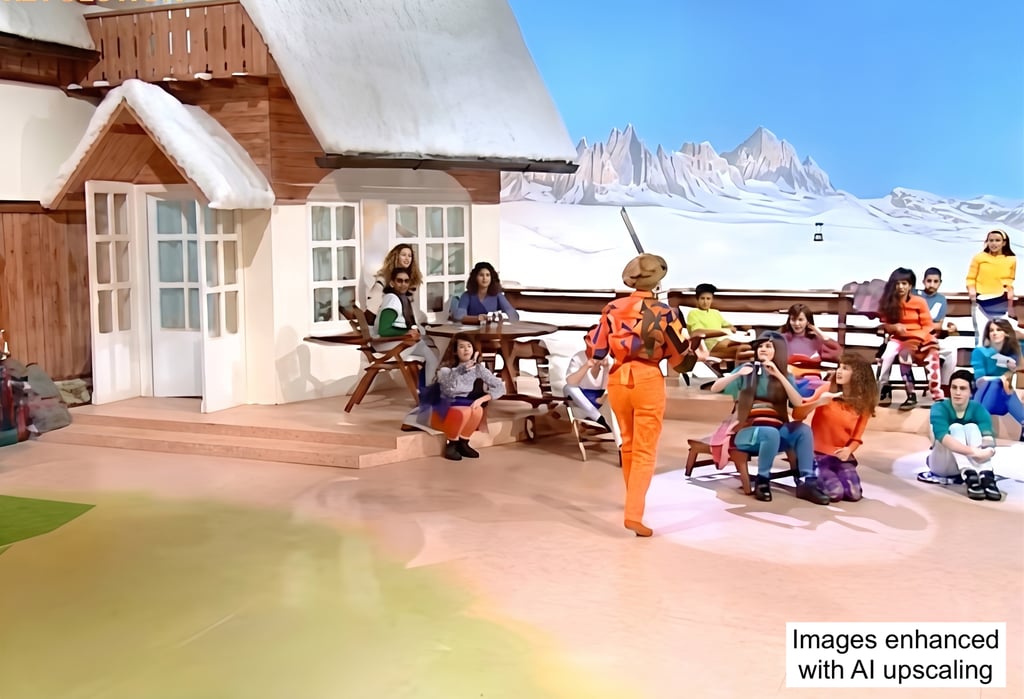
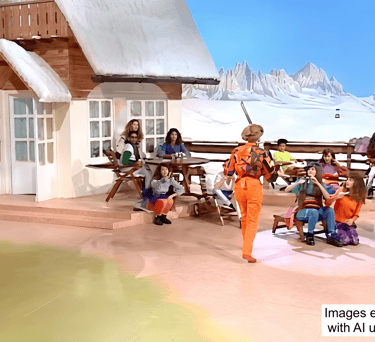
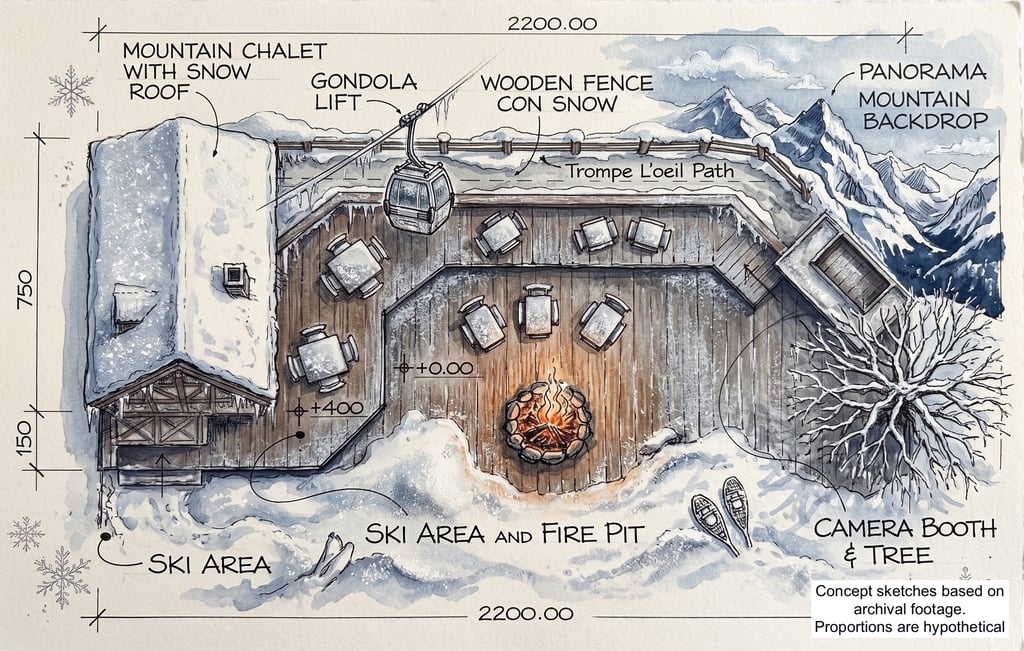
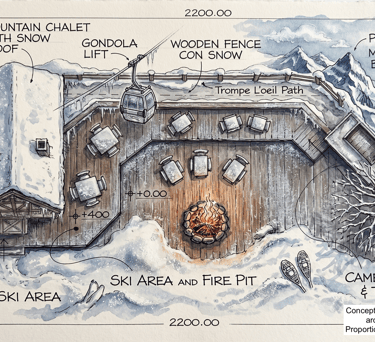
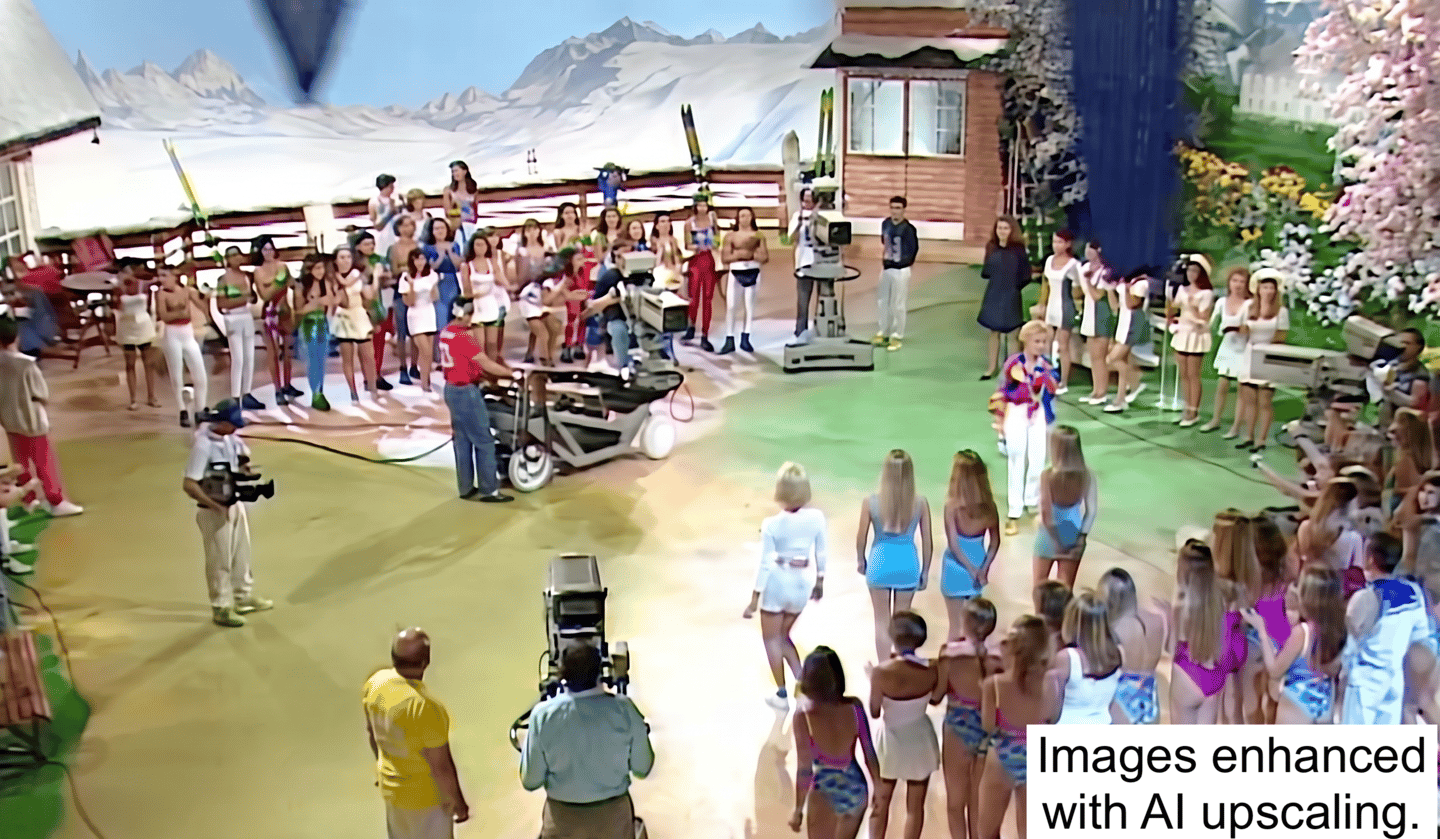
The winter zone was a mountain ski resort, complete in every detail. To the left, a snow-covered mountain chalet with a wooden roof — substantial enough to double as a crew shelter. To the right, a small camera booth with a camera mounted on top. Between them, snow-dusted wooden rail fences overlooking a painted mountain backdrop, a full valley rendered entirely by hand.
Wooden ski-slope sun loungers completed the furniture. And then there was the detail that audiences remembered for years: a fully functioning scale model gondola lift — a cable car — moving continuously back and forth across the set. In 1992, on a television budget, with no digital assistance whatsoever, that little cable car was pure theatre.
Autumn
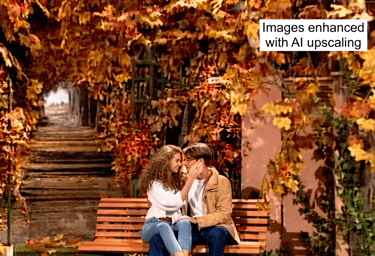
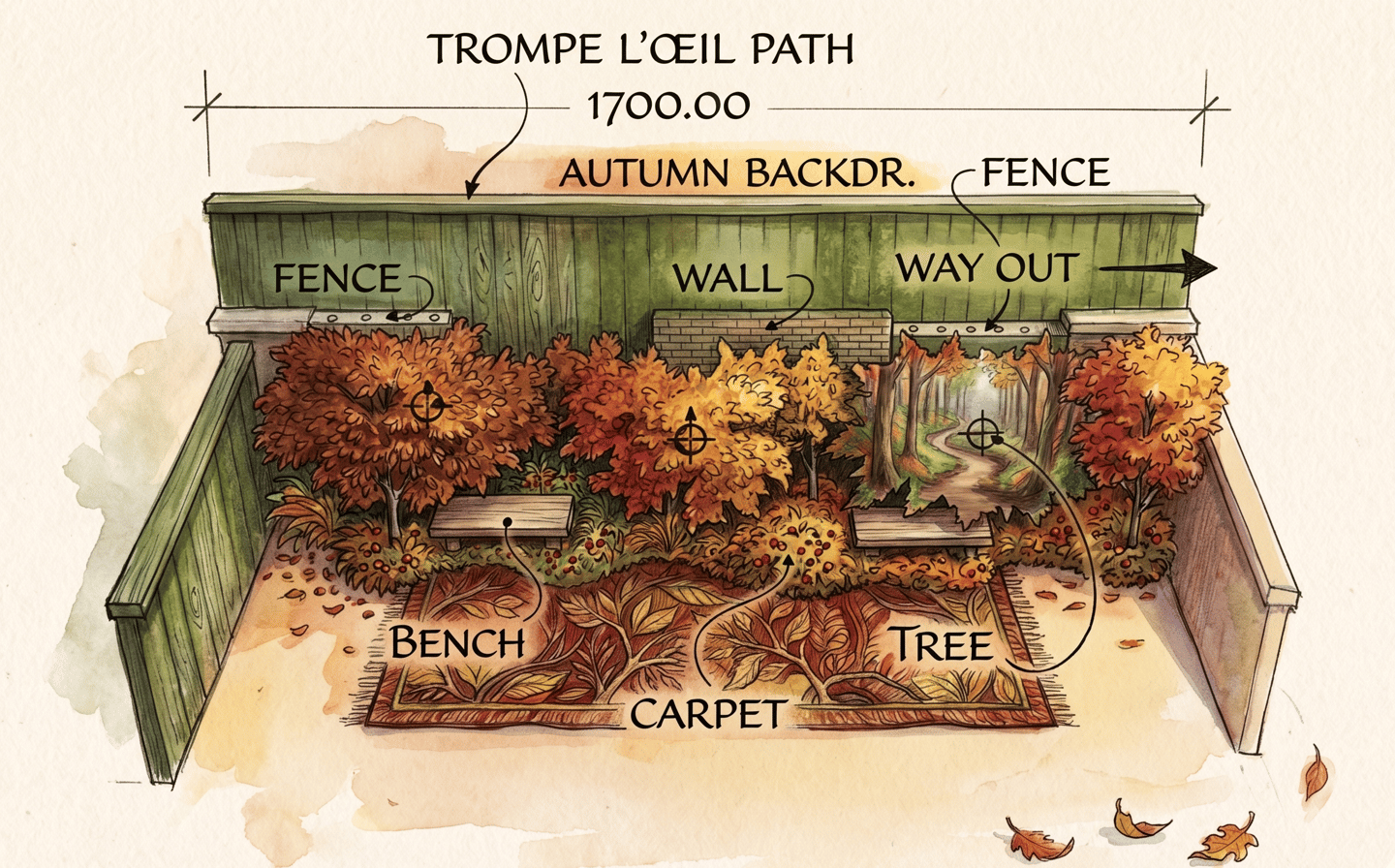
The autumn zone was, by any aesthetic measure, the most beautiful. It was likely the studio entrance — the first thing you saw when you walked in — and Bocchini treated it accordingly.
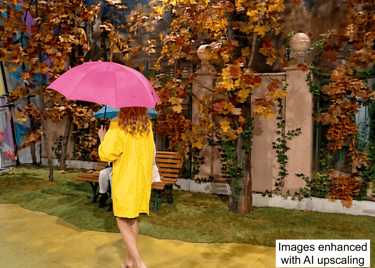
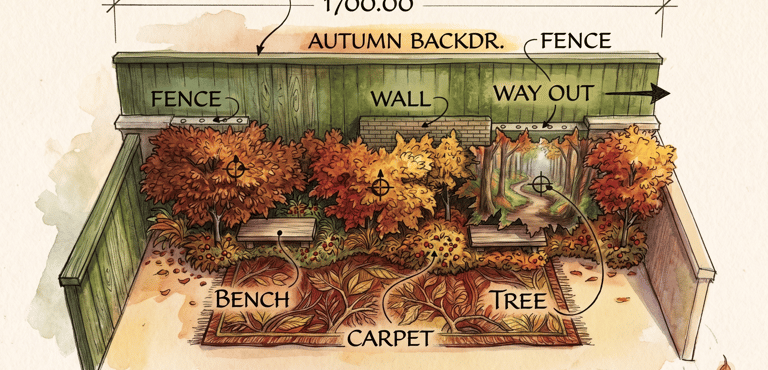
The scenic concept was built around a trompe-l'œil woodland path. A painted autumn landscape backdrop, its leaves rendered at true 1:1 scale, sat behind a row of real but bare trees. The eye could not find the join. The painted leaves and the real branches merged into a single continuous forest. In front of the trees, a low stone wall dressed with ivy, dry leaves and weathered plants added a further layer of depth.
Wooden benches, couples seated on them, the feeling of an October afternoon in a city park. Quiet, romantic, melancholy in the best possible sense.
The Joins: Where the Genius Really Lives
Designing four seasons is one challenge. Making them coexist without visible breaks is another entirely — and it is here that Bocchini's architectural thinking is most clearly on display.
Between summer and autumn: surf boards standing upright, acting as a scenic divider that felt entirely natural within the beach context.
Between summer and spring: outdoor showers and a cascade of green foliage, blurring the boundary between sand and garden.
Between spring and winter: snow-laden trees gradually replacing the blossoming ones, the transition so fluid you could not pinpoint exactly where one season ended and the other began.
Between winter and autumn: a full wall of skis, stacked and leaning, creating both a visual break and a piece of quiet environmental storytelling.
Every join was a solution to a technical problem that also happened to be beautiful.
Why It Still Matters
Bocchini himself has said that today, LED walls have replaced the trompe-l'œil. He is right. Modern television scenic design is built on light, projection and digital surfaces. What Bocchini did in that studio thirty years ago — fibreglass sand, hand-painted cycloramas, scale model cable cars, 1:1 painted leaf surfaces — belongs to a tradition of craft that has largely disappeared.
Which is precisely why it deserves to be remembered. Not with nostalgia, but with professional respect. Because what he built for Non è la Rai was not a television set. It was an act of scenic architecture — four worlds inside one room, held together by intelligence, precision and an almost theatrical sense of wonder.
We could not do it that way today. We would not even try. And that, perhaps, is the most interesting thing about it.